The global indoor trampoline park industry has entered a phase of accelerated growth. According to the Global Amusement & Recreation Equipment Market Report 2025 (Grand View Research), the indoor active entertainment sector is projected to surpass USD 58 billion by 2030, growing at a CAGR of approximately 7.4%. Trampoline parks — once a niche novelty — now anchor mixed-use entertainment centers, family recreation campuses, and sports-fitness hybrid venues across every major market.
Yet for investors and procurement teams evaluating this space, the central challenge is the same: how do you identify a genuinely good trampoline park setup from a low-quality one? Poor equipment selection leads to accelerated wear, elevated liability exposure, unsatisfied guests, and ultimately failed operations. This guide cuts through the noise to help owners, operators, and buyers make informed decisions backed by industry data and safety standards.
—
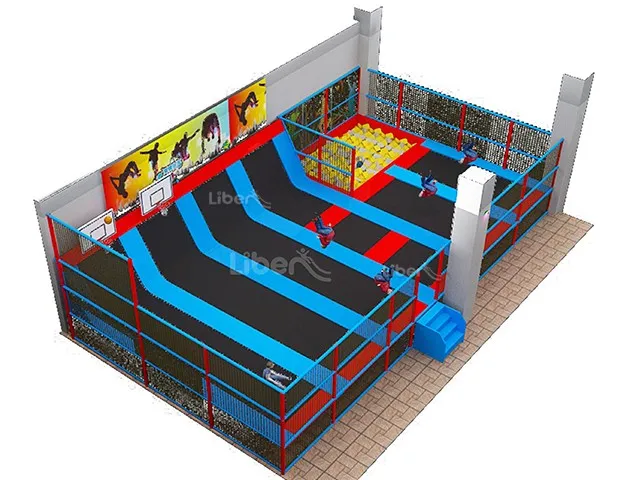
What Is a Good Trampoline Park?
A good trampoline park is not simply a large room filled with jumping mats. It is an engineered recreational environment that integrates structural integrity, certified safety equipment, diverse activity zones, and an optimized guest flow — all designed to maximize both enjoyment and revenue per square foot.
Key defining characteristics include:
– ASTM F2970-certified or equivalent-standard jumping surfaces and safety padding
– Multi-zone activity design that accommodates different age groups and ability levels simultaneously
– Engineered steel frame systems with documented load ratings and fatigue testing
– High-density foam pit construction with appropriate foam block sizing and depth per safety guidelines
– Commercial-grade trampoline beds — woven polypropylene or equivalent — rated for tens of thousands of cycles before replacement
> Summary: A good trampoline park is an engineered, multi-activity indoor facility built to certified safety standards, capable of sustaining commercial traffic volumes while delivering a differentiated guest experience.
—
Types of Good Trampoline Parks
Not all trampoline park formats serve the same market or business model. Understanding the major types helps investors match the format to their site, budget, and target demographic.
1. Open Jump Freestyle Parks
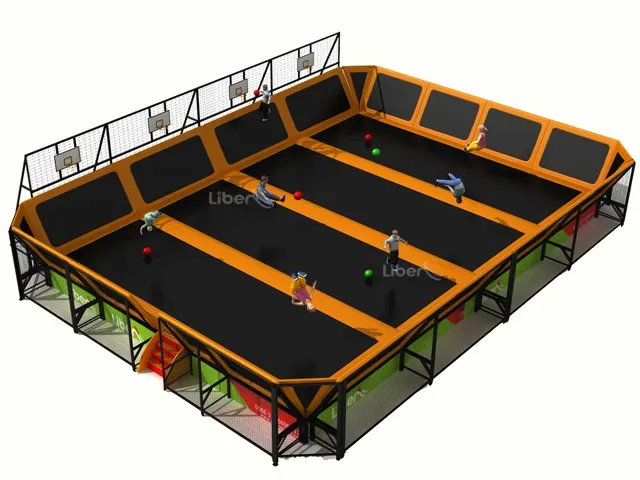
The classic format: large interconnected main courts, slam dunk basketball hoops, dodgeball arenas, and foam pits. Best suited for suburban family markets with high foot traffic.
2. Sports Performance & Training Centers
Incorporates tumbling tracks, gymnastics training trampolines, and wall-running elements. Targets teen athletes, gymnastics clubs, and adult fitness seekers. Higher per-session yield than pure leisure venues.
3. Adventure-Hybrid Parks
Combines trampoline zones with ninja obstacle courses, climbing walls, laser tag, and escape rooms. Dominant in urban entertainment destinations and mixed-use retail complexes.
4. Kids’ Soft Play + Trampoline Combo
Designed for younger children (under 7), integrating foam play structures with low-height junior trampolines. Lower injury risk profile; popular in shopping malls and family dining centers.
5. Trampoline Park + FEC (Family Entertainment Center)
A full-spectrum facility adding arcade games, food & beverage, party rooms, and virtual reality. Maximizes revenue per visit and per square foot. Requires larger investment but delivers stronger per-location EBITDA.
> Summary: The five major trampoline park formats span from lean open-jump venues to full family entertainment centers — each with distinct capital requirements, target demographics, and revenue models.
—
Best Good Trampoline Park Equipment (2026)
Selecting the right equipment is the single most consequential decision in a park’s development. The following categories represent the essential equipment backbone of any high-performing installation:
Main Jump Courts
– Frame: Hot-dip galvanized steel, minimum 50mm × 50mm square section, bolt-connected (not welded joints in load-bearing nodes)
– Beds: UV-stabilized woven polypropylene, 6mm × 6mm mesh; minimum 8,000+ cycles rated
– Springs: Galvanized steel, minimum 110mm length; spring count per mat should follow ASTM F2970 density recommendations
Foam Pits
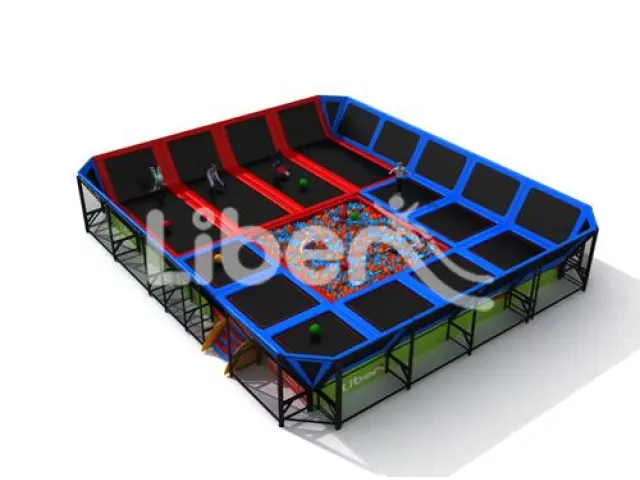
– Minimum pit depth: 1.0–1.2 m of foam blocks above a cushioned base
– Block size: 100mm × 100mm × 100mm standard; must be non-absorbent, flame-retardant
– Perimeter walls: minimum 300mm thick EPE foam, covered with vinyl-coated fabric
Tumbling Tracks
– Minimum 12m run length for commercial venues; 18–25m for performance-oriented parks
– Dual-layer foam/spring system for consistent rebound
– End walls padded with minimum 200mm high-density foam
Ninja/Obstacle Course Zones
– Modular steel frame with bolt-in attachment points
– Wood-core climbing holds with anti-slip textured surfaces
– All horizontal runs should have independent fall mat coverage
Safety Padding Systems
– All steel perimeter frames padded with minimum 70mm high-density PE foam
– Cover materials: PVC tarpaulin minimum 0.9mm thickness, double-stitched seams
– Color coding recommended to assist staff supervision of zone boundaries
> Summary: Best-in-class trampoline park equipment combines certified steel frame systems, commercial-rated jumping beds, deep foam pit construction, and comprehensive perimeter padding — all sourced to recognized safety standards.
—
How to Choose Good Trampoline Park Equipment
The procurement decision involves more than comparing prices. The following framework helps buyers evaluate suppliers and configurations systematically:
Step 1: Verify Safety Certifications
Demand documentation of compliance with:
– ASTM F2970 (Standard Practice for Design, Manufacture, and Operation of Indoor Trampoline Courts)
– EN 913 (Gymnastic Equipment — General Safety Requirements) for European markets
– TÜV or SGS third-party inspection reports where applicable
Step 2: Assess Structural Engineering Documentation
– Request the structural calculation package prepared by a licensed civil or mechanical engineer
– Verify that load assumptions include dynamic impact loads (not just static weight)
– Confirm anchor bolt specifications and floor loading requirements match your facility’s slab capacity
Step 3: Evaluate Material Specifications
– Ask for material test certificates for steel sections (yield strength ≥ 235 MPa minimum)
– Confirm foam density ratings (pit foam: minimum 25 kg/m³; padding foam: minimum 80 kg/m³)
– Verify bed polypropylene specification and rated cycle life
Step 4: Review Installation and After-Sales Support
– Confirm whether the supplier provides on-site installation supervision or full installation service
– Ask for spare parts availability commitments (spring batches, mat replacements, pad covers)
– Request references from operating parks and, if possible, conduct a site visit
Step 5: Calculate Total Cost of Ownership (TCO)
Low purchase price rarely means low total cost. Factor in:
– Expected bed replacement intervals (typically 2–4 years in high-traffic parks)
– Padding cover replacement (UV degradation; typically 3–5 years outdoors, longer indoors)
– Frame repainting or recoating cycles (galvanized frames extend this significantly)
> Summary: Choosing good trampoline park equipment requires verified safety certifications, engineering documentation, material test data, reliable after-sales support, and a full total-cost-of-ownership analysis — not just the lowest upfront quote.
—
Cost of Good Trampoline Parks
Capital investment varies significantly based on format, scale, and location. The following ranges represent 2026 market estimates based on industry sourcing data and publicly available project disclosures:
Equipment Cost Ranges
| Park Format | Approximate Equipment Budget |
| Small open-jump park (500–800 m²) | USD 150,000 – 300,000 |
| Mid-size hybrid park (800–1,500 m²) | USD 300,000 – 650,000 |
| Large adventure + trampoline park (1,500–3,000 m²) | USD 650,000 – 1,500,000 |
| Full FEC with trampoline zone | USD 1,200,000 – 3,500,000+ |
Additional Cost Factors
– Civil works and fit-out: floor reinforcement, HVAC, electrical — often 30–60% of equipment cost
– Safety flooring: anti-slip vinyl or rubber flooring for non-trampoline zones: USD 15–35/m²
– Licensing and inspections: local permits, fire safety, occupancy certificates — varies by jurisdiction
– Soft launch and staff training: budget USD 15,000–40,000 for pre-opening operations
Revenue Benchmarks (2026)
– Average per-head ticket: USD 15–30 (varies by market and session duration)
– Typical weekend capacity utilization in established parks: 70–85%
– Payback period for well-located, well-operated parks: 2.5–4.5 years
> Summary: A good trampoline park requires total capital investment ranging from USD 300,000 for a compact open-jump venue to over USD 3 million for a full FEC format — with equipment typically representing 40–55% of total project cost.
—
Applications and Real-World Cases
Good trampoline parks have demonstrated strong performance across a diverse range of deployment contexts:
Urban Shopping Mall Activation
Multi-story malls in Southeast Asia and the Middle East increasingly anchor a leisure floor with a trampoline park as the primary footfall driver. Typical footprint: 800–1,200 m². Benefit: built-in foot traffic from retail visitors.
Standalone Suburban Leisure Center
The original and still dominant model in North America, Australia, and the UK. Large-format parks (1,500–3,000 m²) with dedicated parking serve the 5–14 age demographic and birthday party market. Average party room revenue can contribute 20–30% of total revenue.
Sports Club and Athletic Training Integration
National gymnastics federations in Europe and Asia have incorporated trampoline training facilities into club infrastructure. These installations prioritize performance-grade equipment over themed aesthetics.
Resort and Hotel Recreation Amenity
Mid-to-large resorts in beach and mountain destinations have installed indoor trampoline zones as inclement-weather activity alternatives. Smaller footprint (400–600 m²) with a curated activity mix.
School and Municipal Recreation
Government-funded community recreation centers in Scandinavia, Canada, and parts of East Asia have invested in trampoline facilities as structured physical education infrastructure, citing benefits for coordination, bone density, and cardiovascular fitness documented in Journal of Sports Science & Medicine .
> Summary: Good trampoline parks perform across shopping malls, standalone leisure centers, sports clubs, resort amenities, and public recreation facilities — each context requiring a tailored equipment mix and revenue model.
Frequently Asked Questions (FAQ)
Q1: What is the minimum space required to open a good trampoline park?
A functional commercial trampoline park requires a minimum clear floor area of approximately 400–500 m² , with ceiling height of at least 5.5 meters for standard jump courts and 6–7 meters if foam pit diving boards or elevated platforms are included. Below 400 m², the activity mix becomes too limited for commercially viable throughput.
Q2: How long does it take to build and install a trampoline park?
Equipment manufacturing lead time for a mid-size park (800–1,500 m²) is typically 60–90 days from order confirmation. On-site installation, depending on complexity, takes 15–35 days . Including civil works and permitting, total project timelines from contract signing to opening average 5–8 months .
Q3: What safety certifications should I require from a trampoline park equipment supplier?
At minimum, require ASTM F2970 compliance documentation and a third-party inspection report from a recognized body such as TÜV, SGS, BV (Bureau Veritas), or equivalent. For European markets, EN 913 compliance is additionally required.
Q4: How many staff members does a trampoline park need?
Industry guidelines recommend a minimum of 1 trained staff member per 50 participants on the floor at all times. Larger parks with multiple zones, ninja courses, and foam pits may require higher ratios (1:30 to 1:40) in high-traffic periods. Front-desk, cleaning, and management roles are additional.
Q5: What is the typical lifespan of trampoline park equipment?
With proper maintenance, commercial-grade steel frames last 10–20 years . Jump beds require replacement every 2–4 years depending on traffic volume. Padding covers typically last 3–6 years before UV degradation requires replacement. Springs should be inspected every 6 months and replaced in batches as needed.
Q6: What are the most common causes of trampoline park injuries?
According to research published in Pediatrics (American Academy of Pediatrics) and Injury Epidemiology (Springer), the most frequent causes are:
– Multiple simultaneous jumpers colliding on a single court section
– Falls from trampolines onto inadequately padded perimeters
– Inappropriate use of equipment (e.g., attempting flips without training)
Proper zoning, supervision ratios, and clear rule enforcement significantly reduce incident rates.
Q7: Can a trampoline park be profitable in a small city or rural market?
Yes, with adjusted scale. Parks of 400–700 m² in smaller markets (population 50,000–150,000) have demonstrated viability when positioned as the primary family entertainment destination in the area. The key is matching scale to the realistic catchment population — oversizing for the market is a common cause of underperformance.
Q8: What is the difference between residential and commercial trampolines?
Commercial trampolines used in good trampoline parks are engineered for continuous multi-user cycling , with frames rated to 10× or greater load factors compared to residential units. Spring counts, bed tensioning, frame galvanization, and fatigue testing requirements are substantially higher. Residential trampolines are not appropriate for commercial park use and their installation in a public venue creates severe liability exposure.
—
Ready to Build or Upgrade Your Trampoline Park?
Whether you are evaluating your first indoor entertainment investment or upgrading an existing facility to compete in the 2026 market, the quality of your equipment decision determines everything downstream — guest satisfaction, operational costs, liability profile, and long-term returns.
What to do next:
- Define your target footprint and format based on your market catchment analysis
- Request certified equipment specifications with ASTM F2970 or EN 913 documentation
- Ask for a layout design and 3D rendering before committing to any supplier
- Verify structural engineering calculations against your facility’s actual floor specifications
- Compare total cost of ownership, not just equipment purchase price
Investors and operators who take a rigorous, standards-based approach to procurement consistently outperform those who optimize for initial cost alone. The gap in operating outcomes between well-specified and poorly specified parks is measurable within the first 18–24 months of operation.
Connect with an industry specialist to discuss your project requirements, site constraints, and budget parameters before finalizing your equipment plan.
—
References
1. Grand View Research — Global Amusement & Recreation Equipment Market Report , 2025 edition.
2. ASTM F2970 — Standard Practice for Design, Manufacture, Installation, and Operation of Indoor Trampoline Courts . ASTM International.
3. EN 913 — Gymnastic Equipment — General Safety Requirements . European Committee for Standardization (CEN).
4. Pediatrics — “Trampoline Park Injuries in the United States.” American Academy of Pediatrics (peer-reviewed journal).
5. Injury Epidemiology — Articles on indoor recreational injury patterns. Springer Nature.
6. Journal of Sports Science & Medicine — Research on trampoline exercise and physiological benefits.
7. IBISWorld — Trampoline Parks Industry Report , 2024–2025.
8. Leisure Development Partners — Indoor Active Entertainment Market Outlook , 2025.