

Trampoline Park Market Research Shows Steady Growth
Trampoline park market research shows steady growth in the equipment segment. Contrive Datum Insights values the trampoline park equipment market at USD 1.95 billion in 2025. It projects USD 3.466 billion by 2034, a 6.6% CAGR. The trampoline park equipment market data covers market size, demand drivers, equipment categories, regional differences, and competitive conditions.
Business professionals can use these findings to guide a trampoline park investment. They inform a capex breakdown and support plans to build a trampoline park. Moreover, they sharpen commercial trampoline park investment return forecasts. Operators weighing a trampoline park startup should note indoor trampoline parks anchor demand. Equipment choices and trampoline park market research shape procurement and expansion decisions.
Key Takeaways
- The trampoline park equipment market is growing at a steady pace. Experts predict it will grow between 4.5% and 8.5% each year.
- A mix of trampolines, foam pits, and ninja courses brings in people of different ages. This variety raises revenue and brings visitors back again.
- Safety certification is key for insurance and customer trust. Pick equipment that meets ASTM and EN standards.
- North America and Europe focus on upgrades and replacement parts. The Asia-Pacific region offers chances for new compact parks.
- Put money into approved equipment and buy it in steps. This way you can control costs and stay on track to break even steadily.
Trampoline Park Equipment Market Overview

Market Size Estimates
Numbers published for the trampoline park equipment market differ a lot. This gap shows different scopes and methods, not a real dispute. Contrive Datum Insights puts the trampoline park equipment market at USD 1.95 billion in 2025. It expects USD 3.466 billion by 2034. Research and Markets expects the global trampoline park equipment market to reach about $2.5 billion by 2030. It sees a 4.5% CAGR over 2024–2030. Market Research Intellect takes a narrower view. It values the market at USD 705 million in 2025 and expects USD 1.59 billion by 2035. Each study defines the trampoline park equipment market segmentation in its own way. Some analysts count full park fit-outs, including installation and soft play elements. Others track only the jumping hardware itself. Readers of trampoline park market research should compare the underlying scope before comparing headline totals. No single estimate should be treated as definitive.
Growth Rate Consistency
The growth rates tell a more consistent story than the absolute values. Reported CAGRs for the trampoline park equipment market fall in a mid-single-digit to high-single-digit band. Research and Markets cites 4.5%, Contrive Datum Insights cites 6.6%, and Market Research Intellect cites 8.5% for its 2027–2035 window. Every source points the same way: steady expansion, and no study forecasts contraction. The difference in pace follows each study’s base year, forecast horizon, and definition of what counts as trampoline park equipment. A broader definition that includes foam pits, ninja courses, and climbing walls tends to produce a larger base and a more moderate growth rate. A narrower definition focused on trampoline beds alone can show faster percentage growth from a smaller starting point. For planning purposes, the practical takeaway is a lasting upward trend rather than an exact number. Business professionals should treat the range as a planning corridor. Procurement schedules and investment models built on steady mid-single-digit growth will hold up across the published estimates. Models that depend on the fastest figure carry more risk. The trampoline park equipment market overview above supports one firm conclusion: demand for trampoline park equipment keeps growing at a measured, reliable pace.
Key Growth Drivers and Trends
Family Entertainment Demand
Families now want to spend time together doing things, not just watching shows. This change boosts demand in the trampoline park equipment market. Parents book sessions that keep kids moving and busy for hours. Indoor trampoline parks meet that need with play that works in any weather. Operators see more repeat visits when a venue offers different attractions all in one place. Group events, birthdays, and school trips bring in steady weekday traffic. Each of these groups rewards venues that invest in versatile trampoline park equipment.
The equipment itself shapes what visitors experience. Parks that mix free jumping zones, foam pits, and ninja courses serve toddlers through teenagers. That range widens the customer base and supports higher ticket revenue. Buyers who model trampoline park startup costs should treat attraction variety as a revenue lever, not just a capital line. A well-planned mix of trampoline park equipment keeps guests coming back and spreads demand across age groups.
Safety and Technology Innovation
Safety engineering now drives purchase decisions in the trampoline park equipment market. Leaf-spring systems replace traditional coil springs and give a lower-impact jump. Smart trampolines use sensors to track airtime and jump height. These features turn safety-enhanced equipment into a premium draw for athletes and families alike. Strong safety enclosures and padding protect jumpers at every zone boundary. Manufacturers also build to EN1176-3 and ASTM safety standards, which gives operators a clear benchmark for safety compliance.
Durable materials and modular layouts lower operating friction. Galvanized steel structures usually last 10 to 15 years, while mats, pads, and springs need replacement every 2 to 4 years depending on traffic. Modular designs let operators rearrange a floor plan as rental space shrinks or preferences change. IoT-enabled safety monitoring systems spot risky behavior and alert staff in real time. Predictive maintenance tools cut downtime before failures occur. A medium park’s initial setup runs $1M–$3M, so smart trampoline park equipment protects a substantial investment. IoT-enabled safety monitoring systems also reassure parents, and that trust supports repeat visits across the trampoline park equipment market.
Trampoline Park Equipment Types
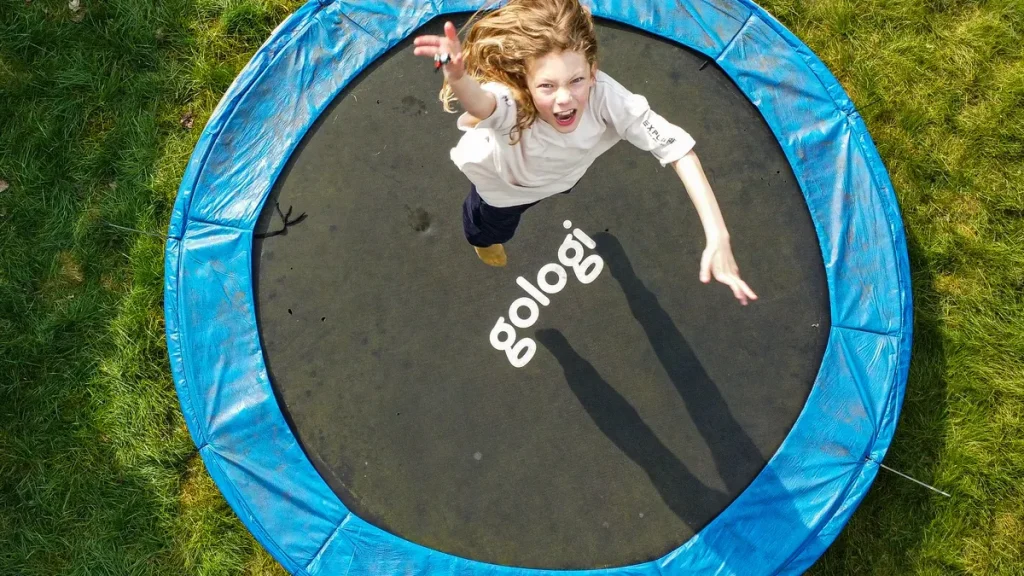
Trampolines, Foam Pits, and Ninja Courses
Each kind of equipment has its own job in a trampoline park layout. Trampolines handle lots of jumpers and move the most visitors per hour. Foam pits give soft landings for aerial tricks and ease stress on joints. Ninja courses add skill-based challenge and draw older kids and adults who want to test strength and balance. A balanced floor plan uses all three, and that mix shapes trampoline equipment pricing and total equipment costs for a new venue.
Operators should match each zone to its traffic pattern. The main trampoline area takes the heaviest use, so durable mats and springs matter most there. Foam pit zones need proper safety enclosures and padding at every edge. Ninja courses work best with modular layouts that let staff adjust difficulty over time. Flooring and shock absorption systems under each zone protect the building structure and extend equipment life.
Liben Play Trampoline Solutions
Liben Play builds trampoline park equipment for compact spaces. The line fits limited footprints and turns small areas into active play zones. Layouts are customizable and can include free jumping zones, foam pit zones, climbing walls, basketball setups, and soft walls. These features support a varied trampoline park layout without crowding the floor.
Quality signals matter in the trampoline park equipment market. Liben Play holds a GS certificate from TUV Germany and meets ASTM and EN1176 safety standards. Core materials include galvanized steel pipe, PP, foam, and PVC. The build list covers:
- Metal parts: galvanized steel pipe
- Soft parts: EPE foam and PVC leather
- Trampoline mat: PP
- Springs: manganese steel or piano wire
- Foam cubes: PU foam
Buyers comparing manufacturer-direct trampoline equipment pricing should weigh certification and materials together. Certified trampoline park equipment lowers long-term risk, and that advantage grows across the trampoline park equipment market as operators expand or retrofit existing sites.
Regional Market Variations
North America and Europe
North America and Europe both show steady demand, but their rules and replacement habits are not the same. The US brings in 85% of regional revenue, going from USD 0.63 billion in 2025 to USD 1.0 billion by 2034. Europe makes up 28% of global revenue, at USD 0.55 billion in 2025 and USD 0.87 billion by 2034. Its share drops to 25% by 2034 as other regions grow faster.
| Dimension | North America | Europe |
|---|---|---|
| Market maturity | Mature; established infrastructure, leading players, high innovation investment | Steadily expanding; stringent standards, strong innovation ecosystems, government support |
| Safety regulation | Consumer Product Safety Commission oversight; ASTM trampoline court standard is the main benchmark for insurers and inspectors | Stringent environmental and regulatory frameworks; regional disparities shape competition |
| Replacement demand | Fast lead times on replacement parts, repair kits, spring tools, maintenance services | Durability, easy maintenance, and recurring safety audits valued |
Operators who plan to build a trampoline park in these regions should set aside money for replacement parts and repair services from the start. Commercial buyers care about durability and bulk pricing because liability risks make regular safety audits a normal cost.
Asia-Pacific and Emerging Markets
Asia-Pacific is the fastest-growing region in the trampoline park equipment market. Fast urbanization, rising disposable incomes, and a growing middle class drive adoption in China, Japan, and India. Latin America and the Middle East show untapped potential from similar trends. These regions work best for new builds, while mature markets lean toward upgrades and retrofits.
Varying safety standards across regions pose compliance challenges for manufacturers and operators. Meeting diverse regulatory requirements can increase costs and delay product launches, impacting market growth.
Emerging markets reward suppliers who clearly document safety compliance. Indoor trampoline parks in these regions often start as compact formats, so modular trampoline park equipment lowers trampoline park startup costs and speeds opening. Buyers should confirm certification against local safety standards before ordering.
Competitive Landscape and Compliance
Leading Equipment Suppliers
Suppliers in the trampoline park equipment market compete in four areas: custom design, certification, installation help, and after-sales service. Turnkey manufacturers check the site, plan the idea, and make CAD layouts based on venue size and target market. Specialist trampoline makers focus on jump performance and fit operators who hire their own general contractor. Mixed indoor-play manufacturers mix trampolines with soft play, ninja courses, climbing walls, and airbags. Buyers should know that “turnkey” has no single definition. Contracts must say whether civil works, electrical, fire systems, permits, and building approval are included.
After-sales support shows which suppliers are strong and which are weak. Early wear causes downtime, and missing replacement parts directly threaten return on investment. Buyers should look for at least 12–24 months of warranty and ask for client references. Liben Play is one example of industry standing. The company holds ISO9001 and a GS certificate, belongs to IPEMA and ITAP, and helped draft Chinese national standards. It also holds over 100 patents. These credentials support manufacturer-direct trampoline equipment pricing decisions, since documented quality lowers long-term risk across the trampoline park equipment industry.
Safety Standards and Certification
Compliance rests on named standards, not broad claims. ASTM F2970 covers the full lifecycle of commercial trampoline parks in North America: design, manufacture, installation, operation, maintenance, and inspection. EN 1176 governs playground equipment and surfacing in Europe. ASTM publishes voluntary consensus standards and does not issue a universal “ASTM certified” certificate. A credible project file must name the standard edition, test laboratory, equipment covered, and responsible party. Operators should ask for the actual certificate for each product and check the issuing organization, document type, and validity period.
Certification matters because trampoline park liability insurance treats it as a must for coverage. Insurers require documented astm compliance, trained floor monitors, signed waivers, and incident reporting protocols. An operator who cannot show these safeguards faces denied coverage or policy exclusions. This makes safety, legal, and compliance planning a core business function, not paperwork. Safety standards also shape trampoline equipment pricing, because certified trampoline park equipment carries documented testing costs. Operators who build safety compliance into trampoline park startup costs protect both visitors and their investment. As safety standards tighten, certification becomes a lasting competitive advantage in the trampoline park equipment market.
Trampoline Park Equipment Market Future Outlook
Growth Projections
The trampoline park equipment market future outlook points to steady growth over the next five years. New technology, regional expansion, and changing consumer preferences drive this growth across the trampoline park equipment market. Parks are moving toward immersive, digitally integrated experiences with AR and interactive features. These changes reshape park design and create new revenue streams.
| Forecast Dimension | Projected Outlook |
|---|---|
| Overall trajectory (next 5 years) | Steady growth driven by new technology, regional expansion, and changing consumer preferences; a shift toward immersive, digitally integrated experiences (AR, interactive features) that reshape park design and create new revenue streams |
| Consolidation & investment | Faster M&A as larger operators buy smaller/regional players and new equipment/tech providers; fragmented emerging markets offer open space for local manufacturing entrants |
| Underserved segments | Outdoor parks in suburban/rural areas and fitness-oriented facilities; eco-friendly materials and sustainable design as a way to stand out |
| Regional outlook | North America leads (mature markets, franchise growth, VC investment); Asia Pacific is gaining fast through urbanization and middle class growth (China, India, Southeast Asia); Europe is mixed, with the UK and Germany as key growth hubs |
| Near-term regional trend (3 years) | Regions that embrace safety innovation and digital transformation are set to lead expansion; regulatory harmonization is critical |
| Growth constraints | Strict safety compliance costs, high capital/infrastructure investment, consumer safety perception barriers, saturation in mature urban markets, and macroeconomic/geopolitical risks (inflation, supply chain disruption) |
Steady growth shapes procurement timing and investment planning across the trampoline park equipment market. Operators who phase equipment procurement across build-out stages manage capital more effectively. This approach supports a realistic trampoline park break-even timeline. A trampoline park investment planned against steady growth handles slower ramp-up periods. . Recent trampoline park market research supports this measured approach.
Opportunities for Operators
Compact-format parks open new locations in dense urban areas and smaller venues. Customization lets operators stand out and target specific age groups. Retrofit upgrades extend the life of existing facilities and refresh the visitor experience. These three paths suit different stages of a trampoline park startup.
Liben Play’s Trampoline solutions fit each opportunity. The line of trampoline park equipment is designed for compact spaces and offers customizable layouts. Operators who build a trampoline park with Liben Play follow a clear process:
- Free design provided as part of the one-stop service.
- Production of the customized trampoline park.
- Shipping to the customer’s location.
- Installation (whole project completed in about four months).
- Global delivery experience across USA, UK, Austria, Poland, Finland, Sweden, Denmark, Norway, Spain, Israel, Philippines, Indonesia, Chile, Mexico, South Africa, and more.
Every indoor trampoline park Liben builds begins with professional CAD designs. All customized trampoline parks are designed and manufactured according to safety standards, good quality and affordable price, and meet international safety standards.
Certification equipment and phased procurement:
Customization covers attractions, colors, logo, materials, and package. Certificates include EN ISO 23659:2022, ASTM F1487-11, and EN 1176. Production takes 20–40 days after deposit. Installation support comes through an instruction manual or on-site engineers. These options help operators control trampoline park startup costs and align equipment procurement with opening schedules. The trampoline park equipment market rewards operators who plan carefully and choose certified trampoline park equipment. Demand for trampoline park equipment keeps rising, and that trend supports steady trampoline park equipment market growth.
Trampoline park market research shows steady growth in every part it studies. Published estimates cover different things, but all of them predict mid-single-digit growth. Families wanting fun together and new safety ideas drive that trend. Trampolines, foam pits, and ninja courses each handle a different kind of visitor flow. North America and Europe lean toward upgrades and replacement parts, while Asia-Pacific rewards small new builds.
Business professionals should put investment into certified trampoline park equipment and buy in stages. Meeting ASTM F2970 and EN 1176 protects insurance coverage and long-term value. Customization helps a park stand out in competitive markets. The trampoline park equipment market should keep growing at a measured pace, and operators who plan for that range will hold a strong position in the trampoline park equipment market.
FAQ
How fast is the trampoline park equipment market growing?
Published estimates put growth somewhere between the mid-single digits and the high-single digits. Research and Markets says 4.5%, Contrive Datum Insights says 6.6%, and Market Research Intellect says 8.5%. Every source predicts expansion, and none of them predicts a shrink. Planners should treat the range as a corridor, not a single number.
Which equipment mix suits a new indoor park?
A balanced floor plan mixes trampolines for high visitor traffic, foam pits for soft landings, and ninja courses for skill-based challenge. This mix serves toddlers through teenagers and brings in more customers. Modular layouts let operators adjust zones as traffic patterns change.
Why does certification matter for operators?
Insurers treat documented compliance as a requirement for coverage. ASTM F2970 covers the full lifecycle of commercial trampoline parks in North America, and EN 1176 governs playground equipment in Europe. Liben Play holds a GS certificate from TUV Germany and meets both standards. Certified equipment lowers long-term risk.
How long does a customized trampoline park take to deliver?
Liben Play reports production of 20–40 days after deposit. Whole-project completion, including installation, takes about four months. Free design and CAD layouts come as part of the one-stop service. Buyers should line up procurement schedules with opening dates.


