

Trampoline Park Industry Trends and Market Outlook for 2026

The global trampoline park market will hit USD 3.49 billion by 2033. This number answers the main question about market growth potential. The trampoline park industry has grown from a short-lived trend into a strong part of the experience economy. A 13.90% compound annual growth rate supports this change.
The industry is maturing. But new chances for profit exist through innovation and diversification. Operators who accept change will find fresh revenue streams. A trampoline park franchise can adjust its business model to meet shifting consumer demands.
How can stakeholders take advantage of these changes to ensure sustainable success in 2026? The answer lies in understanding trampoline park industry trends and responding strategically. Stakeholders must examine market conditions, demographic shifts, and operational strategies.
Key Takeaways
- The trampoline park market is growing quickly. It will reach $3.49 billion by 2033.
- Mixed fun models bring in more visitors. They mix trampolines with climbing walls, arcades, and more.
- Technology like RFID wristbands and gamified jump tracking brings in more money. They get people to spend more and come back more often.
- Focusing on different age groups and workplace wellness plans brings in steady money. This means the business depends less on birthday parties.
- A franchise or custom design can boost ROI. Both give you proven systems and support to succeed.
Industry State and Key Drivers
Market Size and Growth Trajectory
The global trampoline park market is growing fast. In 2023, the market was worth USD 950.1 million. Experts predict it will reach USD 3,491.5 million by 2033. This shows a 13.90% compound annual growth rate from 2024 to 2033.
| Year | Global Trampoline Park Market Valuation |
|---|---|
| 2023 | USD 950.1 Million |
| 2033 (projected) | USD 3,491.5 Million |
The United States is responsible for a big part of this growth. This shows that North America is a mature region that is still growing. Operators who follow market size and growth trends can plan capacity and investment more confidently.
The larger indoor amusement center market gives useful context. That sector grew from USD 48.5 billion in 2023. It will reach USD 90.8 billion by 2030, growing at a 9.3% compound annual growth rate. The trampoline park industry often ranks as one of the fastest growing in the amusement park industry. This success shows steady consumer demand, not just a passing trend.
Economic Drivers in 2026
Several economic forces will shape the trampoline parks industry in 2026. Consumers still value experiences more than material goods. Families look for affordable fun close to home. Trampoline parks meet both needs with active, social, and repeatable fun.
Technology investment also pushes market growth. Operators now use interactive walls, gamified jump tracking, and digital booking systems. These tools increase visit frequency and average spending per guest. They also create data that helps owners improve pricing and promotions.
Urban real estate trends add another push. Developers are putting trampoline parks inside mixed-use centers and malls more often. This plan fills empty retail space and brings steady foot traffic. The global trampoline park market gains directly from these partnerships. Stakeholders who watch market size and growth trends will find the best regional entry points for 2026.
Key Trampoline Park Industry Trends in 2026

Hybrid Entertainment Models
The move to hybrid entertainment is the biggest change in trampoline parks. Parks with one attraction struggle to keep guests for long visits. Operators who plan ahead now build Family Entertainment Centers (FECs). These spots mix trampolines, climbing walls, arcade games, mini-golf, and soft play areas. Different ages can all have fun under one roof.
A varied revenue model drives this shift. Families spend more time and money when a venue offers more options. A parent can watch a toddler in soft play while a teen jumps nearby. Birthday parties last all day. Food and drink sales go up. This plan lowers reliance on one income source. If one activity slows, others still make money.
In 2026, trampoline parks also target adults. Fitness jump sessions, cardio classes, and low-impact workouts attract more adults. These programs fill weekday mornings and evenings. They bring steady income from memberships. This trend moves trampoline parks past the old birthday-party image.
Technology and Smart Integration
Technology is now at the heart of key trampoline park industry trends in 2026. Interactive walls, projection games, and gamified jump tracking turn simple jumping into a scored game. Visitors compete for high scores. They come back to beat their own numbers.
RFID wristbands tie every part of the guest experience together. Operators say timing starts to the minute at check-in. This exact schedule removes empty gaps between time slots and lifts monthly gross revenue by up to 15%.
| Metric | Value |
|---|---|
| Monthly gross revenue increase | Up to +15% |
| Timing precision | 1 minute |
| Battery life / waterproofing | 11 hr · IP68 waterproof |
| Effect on unwaivered guests | Reduces unwaivered guests |
Spend per band, top-up patterns, session use — the numbers that connect wristband use to revenue, in the same reports as everything else.
Gamification features like leaderboards, achievements, and scored attractions bring guests back to beat their scores. A rewards ladder is built to raise snack sales at little cost. Every guest gets an account, so the park can market to them later. Scored, competitive parties become a premium package rivals cannot easily match. Wallet on Wrist lets guests pay without a phone or wallet, making spending easy.
According to Roller Software, adopting RFID wristbands makes spending easier for guests because card details stay in the band. This removes barriers at checkout, so guests spend more without hesitating. The source also says storing payment details on a wristband is safer and easier than carrying a physical card, which pushes up per-visitor spending.
Online ticket booking for trampoline parks fits well with these tools. Digital systems control capacity, shorten wait times, and collect guest data. Operators who watch current market trends know that smart integration improves both satisfaction and profit.
Demographic Shifts and Target Audiences
Beyond the Teenager
The average age of jumpers keeps going up. Teenagers used to be the main group of visitors. Now, young adults, parents, and even grandparents join in. This change affects how operators plan their spaces and set ticket prices.
Families today want attractions that serve all ages at the same time. One trampoline zone cannot keep their attention for very long. Parks that add climbing walls, foam pits, dodgeball arenas, and soft play areas draw a bigger crowd. Toddlers need safe, padded zones. Adults want challenging courses. Teenagers look for competitive games. A mix of different attractions keeps them all there longer.
This change in who visits creates clear market chances in 2026. Operators who serve many age groups build stronger loyalty. They also increase average spending per visit. A parent who jumps with a child buys more snacks and stays for a full afternoon. The trampoline park industry wins when it welcomes every generation, not just the young.
Corporate and Wellness Sector
Companies now book trampoline parks for team-building events. A shared physical challenge breaks down walls between coworkers. Jump sessions, ninja courses, and group games build trust and communication. Corporate bookings fill weekday slots that used to sit empty.
The wellness sector adds another income stream. Fitness instructors lead low-impact jump classes for adults. These classes improve balance, coordination, and heart health. They appeal to people who dislike traditional gyms. A trampoline workout feels like play, not exercise. That emotional hook drives repeat attendance.
Operators can sell monthly memberships for these programs. Steady membership fees smooth out seasonal revenue swings. They also create a predictable base for planning staff and maintenance. The corporate and wellness market rewards parks that position themselves as active entertainment venues. This strategy turns a weekend destination into a seven-day business.
Park Profit Outlook for 2026
Revenue Streams and Margins
The profit outlook for 2026 looks strong for parks that are run well. Admissions are still the main way parks make money. Birthday parties bring in higher margins because they include jump time, food, and special staff. Food and drink sales add steady profit with low overhead. A mix of revenue sources protects operators when one stream slows down.
According to the 2026 Trampoline Park Industry Trends and Profit Outlook guide, a well-run trampoline park is expected to make a profit margin of 20%–35% (20–35 yuan profit per 100 yuan revenue). The margin depends on site selection, rent, and cost control; parks with stronger party and membership income tend to have higher margins.
This range shows why profit margin expectations differ so much across the trampoline park industry. Location has a big impact on profitability. A park in a busy mall pays more rent but gets steady foot traffic. A standalone facility may save on rent but needs strong marketing to bring in visitors. Operators must weigh these trade-offs carefully.
The average roi of a trampoline park depends on several things. Membership programs create steady monthly income. Corporate bookings fill weekday gaps. Concession sales boost per-visit spending. These elements work together to improve the park profit outlook for 2026. Key success factors for profit growth include smart pricing, efficient staffing, and regular equipment maintenance.
Regional Growth Opportunities
North America is still the largest market, but Asia-Pacific is growing faster. European markets mature steadily with strong safety regulations. Emerging markets in Latin America and the Middle East offer fresh market opportunities in 2026.
The recreational trampoline market is expected to grow at a compound annual growth rate of 10.9% from 2026 to 2033. This figure comes from industry sources, which also note the market will expand from about $500 million to around $1 billion by 2033. This growth supports the broader profit outlook for 2026.
Operators who target underserved regions can grab early market share. Smaller cities often lack quality entertainment venues. A well-designed park in these areas faces less competition. It also builds brand loyalty before larger chains arrive.
Key success factors for profit growth include understanding local demographics and adjusting offerings accordingly. A park near schools benefits from after-school programs. A park in a business district gains from corporate events. This flexibility improves return on investment and strengthens the park profit outlook for 2026. Profit margin expectations stay realistic when operators match their business model to local demand.
Challenges and Risk Management
Market Saturation and Competition
In older markets, the trampoline park industry deals with too many parks. Many venues fight for the same local families. This fight pushes admission prices down and makes marketing cost more. Operators must stand out to stay in business. Just having a normal jumping floor is rarely enough to bring in visitors.
Where a park is located shapes this pressure in a direct way. You can see how location affects profit when you compare mall parks with standalone venues. A busy mall brings foot traffic, but rent eats up a big share of revenue. A standalone site pays less rent but needs strong advertising. Both choices come with risk. Good operators check local demographics before they sign a lease.
The trampoline parks industry rewards owners who build a clear identity. Themed zones, ninja courses, or adult fitness programs make a venue stand out. Parks that copy the same layout have a hard time. Working with schools, sports clubs, and corporate teams creates steady demand. These partnerships fill weekday hours when casual visits drop. In crowded areas, loyalty programs and membership pricing keep guests coming back.
Safety Regulations and Insurance
Safety is a main challenge in the trampoline park industry. Governments in many regions enforce strict rules. Equipment must meet recognized certification requirements. Operators must check mats, padding, and frames on a regular basis. Staff training on spotting and guest conduct stops injuries before they happen.
Insurance costs keep going up. Liability coverage is a must because jumping carries natural risk. Providers look at a park’s safety record and staff rules. Parks with weak training programs pay higher premiums. Some even struggle to find coverage at all. This money burden directly affects the trampoline park market outlook.
Keeping high safety standards protects customer trust. Parents think twice about coming back after a visible injury. One serious incident can hurt a venue’s reputation for years. Operators should share their safety policies and show certifications. Routine audits and incident logs prove to insurers that the park runs responsibly. This paperwork also helps get better insurance terms.
The global trampoline park market rewards operators who care about safety. High standards cut down on accidents, lower insurance costs, and build lasting trust in the community. In 2026, risk management is not just an expense. It is a competitive edge that supports long-term profit.
Strategies for Success and ROI
Trampoline Park Franchise Models
A trampoline park franchise is a proven way into the market. Franchise owners get brand recognition, staff training, and tested operating procedures. These advantages help owners avoid early mistakes and expand into new cities faster.
The table below compares average 2025 investments for four major U.S. brands:
| Brand | Average Investment (2025) |
|---|---|
| Sky Zone | $3.75M |
| Urban Air | $5.75M |
| Launch | $5.01M |
| Altitude | $2.29M |
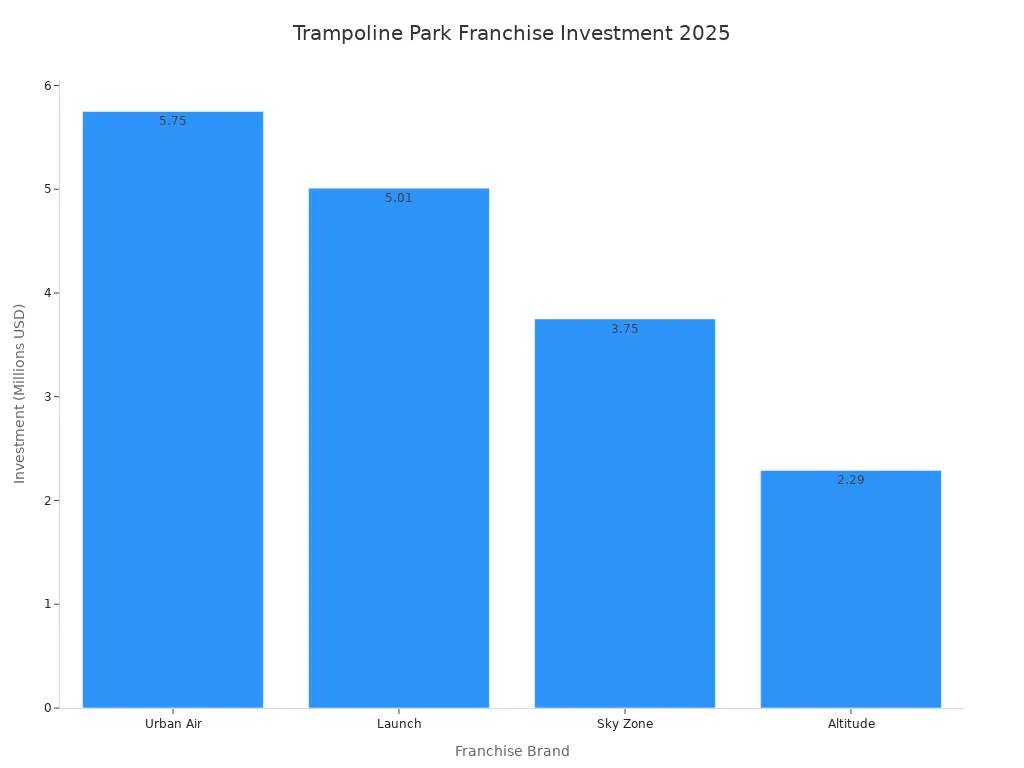
This initial investment breakdown helps owners compare brands before signing. Sky Zone’s full range runs from $2.33 million to $5.18 million. Location, building size, and attraction mix drive those differences. A full investment guide covers land, equipment, and working capital. Understanding the trampoline park cost structure early makes budget and ROI forecasts more accurate. Most profit failures happen because of poor capital planning. A franchise buyer can use each brand’s Item 7 disclosure as a reliable starting point for the same analysis.
A franchise also shortens the learning curve. An owner follows a playbook instead of building every process from scratch. This speed matters in crowded markets, where latecomers lose the best locations. When a new city shows demand, franchisees can build quickly under a trusted brand.
Liben Play’s Customization Advantage
Custom design gives another way to improve trampoline park ROI. Liben Play designs custom indoor amusement parks around the operator’s space, theme, and audience. Its trampoline equipment includes foam pits, climbing walls, ball pools, and basketball zones. The compact layout fits in shopping malls and existing buildings. ASTM standards and EN ISO 23659:2022 cover safety and impact protection.
Liben provides all installation manuals and on-site support. Staff training and marketing templates reduce the burden on new owners. The full setup process from planning to installation takes about 6-8 months. Opening faster brings cash flow sooner, and that directly improves trampoline park ROI.
Liben’s ROI analysis looks at market demand, capacity, and maintenance costs. These projections support budget and ROI forecasts before construction begins. Liben also helps with site selection and 3D modeling to prevent costly design mistakes. The trampoline park cost structure depends on local conditions, but customization lets owners choose the right size. A detailed, itemized list of startup costs from Liben’s design team gives investors a clear cost picture before they commit.
This custom path is a strong alternative to a trampoline park franchise. It keeps control over engineering and global safety compliance.
The trampoline park industry in 2026 rewards operators who go beyond simple jumping floors. Hybrid models, smart technology, and different audiences all drive growth. These things raise return on investment and protect profits.
The trampoline park industry shows real strength. Parks that use the active entertainment model will keep steady demand. A trampoline park franchise is one path. Custom design is another.
Investors should study local demand and cost structures before they spend money. Operators should upgrade technology and add more programs now. Adapting is what separates winners from the rest.
FAQ
How much does it cost to open a trampoline park?
The cost to open a trampoline park depends on where it is, how big it is, and what attractions it has. Big U.S. franchise brands show a total investment range from about $2.29 million to $5.75 million. A custom-designed park may cost less. Operators should make a detailed budget before they commit.
What is the average ROI of a trampoline park?
The average roi of a trampoline park changes based on the market and business model. Parks that are run well earn profit margins of 20% to 35%. Strong party bookings, memberships, and food sales push returns higher. Location and cost control drive the final number.
Is a trampoline park franchise better than building an independent park?
A trampoline park franchise gives you brand recognition and proven systems. Independent parks keep full control over design and branding. Both paths work. The right choice depends on the operator’s budget, timeline, and how much risk they can handle.
What does the profit outlook for 2026 look like?
The profit outlook for 2026 stays positive. Parks with hybrid models and smart technology capture more revenue. The trampoline park industry rewards operators who add different income streams.
How long does it take to open a park?
A custom-designed park takes about 6 to 8 months from planning to installation. Franchise timelines vary by brand and site. The cost to open a trampoline park includes equipment, lease, and working capital. A clear total investment range helps owners plan cash flow.


