

Custom Indoor Playground Equipment Trends to Watch in 2026

Is your play space a place people want to visit, or just a quick stop? The family fun market hit USD 29.8 billion in 2024, growing 10.4% each year to reach USD 80.2 billion by 2033. That growth means more rivals. Already, 54% of visitors around the world prefer hands-on, immersive fun over old-style games. By 2026, you will need more than slides and ball pits. You need playground indoor equipment that delivers active play and exciting stories. Designing play around a story turns your space into a key spot for families. This article looks at new trends in custom design and tech, helping you make your indoor playground a place people must visit.
Key Takeaways
- Custom playgrounds improve brand identity and use space well.
- Play areas that include places to eat and shop make visitors stay longer and spend more money.
- Nature themes and multi-level structures draw in families and make great photo moments.
- Original story themes build unique branding without licensing costs.
- Smart tech like RFID wristbands makes play more personal and helps things run better.
- Inclusive design welcomes every child and still meets safety rules.
- Eco-friendly materials and flexible designs help harm the planet less.
- Hybrid models, such as play cafes and edutainment spaces, help boost income.
Why Custom Playground Indoor Equipment Matters in 2026
Generic catalog equipment no longer meets modern expectations. Parents today search for unique experiences that feel fresh and intentional. They want a space different from every other play center. Custom solutions answer that need. Liben Play has completed many projects worldwide. That demand for tailor-made designs confirms one truth: one-size-fits-all no longer works. Custom playground indoor equipment gives you the power to differentiate your business. When you invest in a tailored indoor playground, you create a space that attracts loyal customers and drives repeat visits.
Beyond the Catalog: The Shift to Bespoke Solutions
Standard catalogs offer safe options, but those options create forgettable spaces. Bespoke solutions put you in control. You decide every detail from the theme down to the color of each component.
Branding and Identity Integration
Your brand tells a story. Custom builds bring that story to life across your play zone. A children’s museum may choose a nature theme that teaches environmental awareness. A shopping mall may select a space theme that matches its architecture. Your indoor playground equipment becomes a physical extension of your brand identity. Durable indoor playground equipment also meets international safety standards like EN1176. Visitors remember the experience because it feels cohesive and purposeful. This connection drives return visits and builds long-term loyalty.
Space Utilization and Flow Optimization
Every square foot matters in a commercial space. Custom designs match your exact floor plan. You remove wasted corners and awkward gaps. Traffic flows smoothly. Children move naturally from one activity to the next. Parents maintain clear sightlines from every angle. Good indoor playground design considers noise levels, traffic patterns, and supervision needs. The result is a space that performs better for your business.
The Rise of Play Ecosystems Over Standalone Structures
Think beyond a single play structure. Leading centers now create entire play ecosystems. These ecosystems combine play with dining, retail, and social spaces. They turn a brief visit into a complete afternoon outing.
Integrating Retail and F&B Zones
Play and dining work together powerfully. Data from operating venues proves this relationship:
| Metric | Without Play Area | With Fully Enclosed Play Area |
|---|---|---|
| Average family visit duration | 42 minutes | 129 minutes |
| Incremental F&B spend per adult | Baseline | +$12–18 per extra 30 min of dwell |
| Projected annual F&B uplift from dwell time | N/A | $300K–$550K |
The Block Jax in Jacksonville, Florida shows how this works. They place a fully enclosed children’s play area with glass walls directly beside the dining and bar area. Parents order drinks and sit with clear sightlines to the play zone. Weekend family visits become the venue’s most reliable traffic source. Birthday party bookings fill the private event calendar. Word-of-mouth spreads among local parents. The key insight: you need 800 to 1,400 square feet of dedicated enclosed play space to shift dwell time at a revenue-changing scale.
Designing for the ‘Third Place’ Concept
People want a third place. That means somewhere between home and work where they feel welcome. Your indoor playground can become that destination. Custom designs let you create comfortable zones for adults and engaging areas for children. Your custom playground indoor equipment builds a space that keeps families coming back. Parents relax with coffee while kids play safely. This model builds community loyalty and turns first-time visitors into regulars.
Custom playgrounds require a higher upfront cost. But the return comes through increased dwell time, premium pricing, and stronger brand loyalty. Partnering with an experienced manufacturer like Liben Play turns your vision into a profitable reality.
Top Design Trends for Modern Indoor Playground Spaces
Google search data for 2026 shows three main design trends: nature-themed playsets, all-in-one activity hubs, and multi-level structures. These trends match what families really want—spaces that feel natural, offer a mix of things to do, and look exciting. Liben Play’s playground indoor equipment uses these trends with themes like jungle, ocean, and space, each fully customizable to your vision.
Nature-Inspired and Biophilic Designs
Biophilic design connects kids with nature, even indoors. This approach lowers stress and helps focus. Parents notice the difference. Children play longer with natural elements than with bright plastic structures.
Wood Textures and Organic Shapes
Wood textures are big in modern indoor playground design. Makers now create realistic wood grain finishes that look like real timber but need less upkeep. Organic shapes replace sharp angles. Curved panels, flowing arches, and uneven platforms add visual interest. These forms feel welcoming, not industrial.
Your indoor playground can have tree trunk columns, leaf-shaped canopies, and branch-like climbing holds. These elements turn a plain play area into a forest adventure. Kids respond naturally to these shapes. The feel of textured surfaces adds another sensory layer to play.
Integrating Greenery and Natural Light
Live plants inside play spaces clean the air and soften noise. Vertical gardens along walls add color without taking up floor space. Some operators place planter boxes into play structures themselves. These green elements create a calmer feel that appeals to parents looking for quality spaces for their kids.
Natural light makes the effect stronger. Skylights and big windows cut down on artificial lighting. When natural light is limited, modern LED systems mimic daylight. This lighting boosts the natural feel of your space. Your indoor playground equipment placement should use available light well while shielding kids from direct glare during peak hours.
Multi-Level Structures and Climbing Challenges
Families want physical challenges that build confidence. Multi-level structures offer this with different heights and difficulty levels. These designs also make the best use of your square footage.
Maximizing Vertical Space for Small Footprints
Urban spots often have limited floor space. Multi-level designs solve this by building upward. Multi-level designs can significantly increase usable play area from the same footprint, allowing a structure to offer a much larger play area across multiple levels. This vertical method increases capacity without needing more floor space.
Each level serves a different age group. Toddlers stay low while older kids climb higher. This separation cuts down on crashes and fights. Your indoor playground design should have several ways to get to each level. Stairs, climbing nets, and slides offer different challenge levels. This variety keeps kids engaged longer and makes them try again.
Engineering for Spectacle and Social Media Moments
Parents share what impresses them. Multi-level structures with dramatic features become social media magnets. A twisting slide visible from the entrance grabs attention. A rope bridge hanging above the play floor creates visual drama. These features look great in photos and give free marketing.
Building these structures takes skill. Load calculations, safety clearances, and fall protection must meet EN1176 standards. Liben Play’s engineering team designs for both spectacle and safety. Each structure balances visual impact with strong construction. The result is an indoor playground that parents photograph and kids remember.
Immersive Themed Concepts and Storytelling
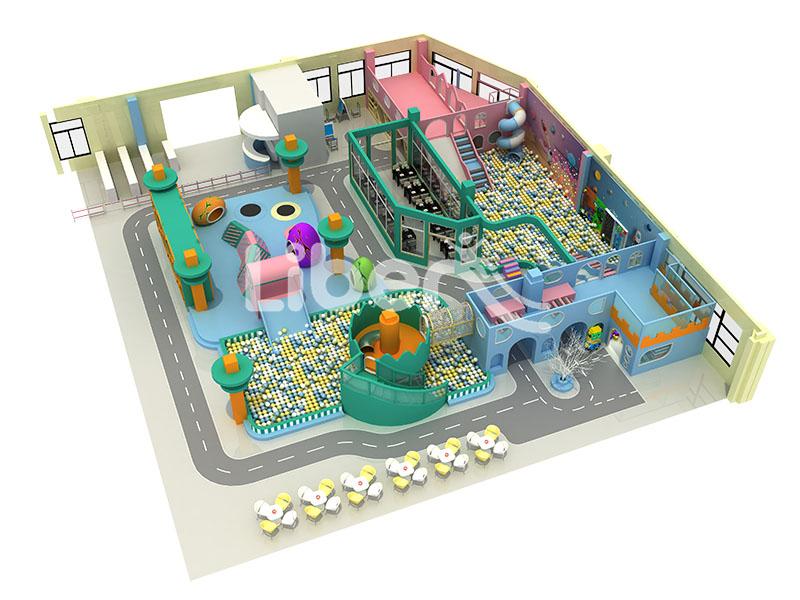
A strong story turns your play space into a place families want to visit. Kids remember adventures, not just equipment. Parents pick spots that promise their children a fun journey. This emotional connection leads to longer stays and more birthday party bookings. Themed ideas give your business a clear identity that rivals find hard to copy.
IP-Licensed vs. Original Story-Driven Designs
You must make a key choice when picking themes. You can license a well-known character or create your own story world. Both options come with their own pros and cons.
Navigating Licensing Costs and Exclusivity
Licensed characters bring instant recognition. Kids see their favorite cartoon hero and ask their parents to stay. This familiarity cuts down on your marketing work. However, licensing fees take up a large part of your budget. Contracts often limit how you can use the characters. You might face rules about selling merchandise or hosting events. Renewal talks can raise costs without warning. If the license ends, you must rebuild your whole play area. That cost can hurt your business badly.
Creating Original Narratives for Unique Branding
Original stories give you full control. You own every part of the design. No royalty payments eat into your profits. Your story can grow with your business. You can change the tale as trends shift or your audience expands. Liben Play offers themed ideas like jungle, ocean, and space adventures. Each theme becomes a fully custom world built for your space. You can add your brand colors and logo into the setting. This method builds a unique identity that no rival can copy. Families start calling your venue by its story name. That recognition becomes strong word-of-mouth marketing.
Architectural Feats and Spectacle Design
Spectacle grabs attention. Big structures create excitement before kids even walk in. Your indoor playground design should include features that make people stop and stare. These building elements become the main focus of your whole venue.
Incorporating Ropes Courses and Treehouses
Ropes courses add vertical adventure that tests older kids. Suspended bridges, cargo nets, and wobbly platforms challenge balance and bravery. These features widen the age range of your visitors. Treehouses create magical hideouts that spark creative play. Multi-level treehouse designs connect slides, climbing walls, and lookout towers. Kids love the thrill of discovery as they explore each level. These features also create natural splits between active and calm play areas. Parents enjoy having many options in one trip.
Designing for Instagram-Worthy Moments
Visual appeal drives free promotion. Parents share photos of impressive play spaces on social media. Each share reaches hundreds of possible customers. Design special spots that look great in pictures. A giant slide coming out of a castle tower creates a stunning view. A glowing tunnel or colorful ball pit wall offers another photo chance. Think about lighting carefully. Warm accent lights make spaces feel magical in photos. Add themed murals or backdrops near seating areas. Parents will snap pictures of their kids having fun against these backdrops. Every photo becomes an ad for your venue. This natural marketing channel costs nothing but brings steady attention.
Themed ideas and spectacle design work hand in hand. A strong story makes your building meaningful. Impressive structures bring your tale to life. Together, they create an experience that families cannot find anywhere else. That uniqueness keeps your venue in mind when parents plan their next trip.
Smart Technology Integration in Playground Equipment

Technology now shapes how children play and how you operate your venue. Google search trends for 2026 show rising interest in projection-mapped climbing walls, motion-tracking games, and RFID wristbands. These tools do more than entertain. They create personalized experiences that bring families back week after week. Smart technology also gives you real data about your space. You learn which attractions perform best and which need attention. This knowledge transforms your indoor playground equipment from a static structure into a living, responsive environment.
Gamification and Interactive Surfaces
Gamification turns physical activity into a game. Children chase targets, earn points, and beat their own records. This approach keeps kids moving longer than free play alone. Interactive surfaces respond to touch and movement. They create feedback loops that reward effort and skill. Your indoor playground design can include these elements without sacrificing safety or durability.
Projection Mapping and Motion-Sensing Floors
Projection mapping turns any flat surface into a digital playground. A climbing wall becomes a volcano eruption. A floor becomes a river filled with fish to catch. Motion-sensing cameras track children’s movements. The system responds instantly to their actions. Kids jump, stomp, and reach as the digital world reacts around them.
These systems work well for group play. Multiple children can interact with the same surface at once. This social element keeps siblings and friends engaged together. The technology also adapts to different age groups. Toddlers chase simple shapes while older kids solve puzzles. You can change the games without changing the hardware. This flexibility extends the life of your investment.
RFID Wristbands for Personalized Play and Rewards
RFID wristbands add a personal layer to the play experience. Each child wears a band that tracks their activity. The system records which attractions they visit and how long they stay. You can use this data to create reward programs. Children earn points for trying new activities or reaching fitness goals. They redeem points for prizes or birthday party discounts.
Parents appreciate the safety benefits too. RFID bands help you manage entry and exit. You know exactly who is inside your facility at any moment. The bands can also link to your payment system. Parents add credits to their child’s account without carrying cash. This convenience improves the overall experience and increases spending at your café or retail areas.
Data-Driven Design and Operations
Smart technology does more than entertain children. It gives you powerful information about your business. Sensors placed throughout your venue collect data continuously. You learn which areas attract the most visitors and which sit empty. This insight guides your future indoor playground design decisions.
Sensors for Traffic Flow and Popularity Analysis
Traffic sensors track movement patterns across your floor. You see where families gather and where they pass through quickly. This information reveals bottlenecks and underused zones. You might discover that your toddler area gets crowded during morning hours while the climbing structure stays empty until afternoon. With this knowledge, you adjust staffing and programming to match demand.
Popularity analysis shows which attractions deliver the best return. You compare play time against maintenance costs for each feature. Some attractions may look impressive but hold attention for only a few minutes. Others keep children engaged for extended periods. You allocate your budget toward the features that perform best. This data-driven approach maximizes your return on every square foot.
Predictive Maintenance for Safety and Uptime
Sensors also monitor the condition of your equipment. Vibration detectors catch loose bolts before they become hazards. Load sensors identify stressed components that need reinforcement. This predictive approach prevents breakdowns that close attractions during peak hours. You schedule repairs during slow periods instead of emergency shutdowns on busy weekends.
Predictive maintenance extends the lifespan of your custom builds. Small problems get fixed before they cause major damage. Your equipment stays safer and lasts longer. This proactive strategy reduces long-term costs and keeps your venue operating at full capacity. Families learn they can rely on your facility for consistent, safe fun.
Inclusive and Sensory-Focused Play Design
Universal design creates spaces that work for everyone. This method removes barriers before they appear. Children with mobility challenges, sensory processing disorders, and typical development all enjoy the same space. Your indoor playground equipment should welcome every child who enters. Liben Play’s equipment meets EN1176 and other international safety standards. These certifications ensure your inclusive space also meets strict safety rules.
Designing for All Abilities (Universal Design)
Universal design means planning for differences from the start. You do not add accessibility later. Instead, you build inclusion into every choice. This approach helps all visitors, not just those with disabilities. Parents with strollers move through wider paths easily. Grandparents join grandchildren on ground-level activities. Every visitor finds something they can enjoy.
Ground-Level Play Components and Calm-Down Zones
Ground-level parts let children of all abilities join in. Ramps replace stairs at key spots. Wide platforms fit wheelchairs and walkers. Sensory panels placed lower invite exploration from seated positions. These features give children who cannot climb a way to play.
Calm-down zones offer quiet spots away from stimulation. Bright lights, loud noises, and crowds overwhelm some children. A cozy corner with soft seats and dim lighting helps them relax. You can place these zones away from busy areas. Acoustic panels absorb sound and create a peaceful feel. Children learn to notice their own limits and take breaks when needed. Parents value this thoughtful design.
Auditory and Visual Stimulation Control
Sensory overload happens when environments give children too much input. You can manage this with careful design choices. Adjustable lighting lets you dim bright areas during quiet times. Acoustic treatments reduce echo and background noise. Visual clutter confuses children with processing challenges. Clean sightlines and organized zones lower confusion.
Your indoor playground design should balance excitement with calm. Active zones feature bright colors and fun elements. Quiet zones use soft tones and simple patterns. This contrast helps children manage their own sensory input. They move between zones based on their needs at any moment.
The Role of Occupational Therapists in Design
Occupational therapists understand how children process sensory information. Their skills turn good playgrounds into healing spaces. Working with these experts lifts your design from useful to life-changing.
Incorporating Tactile, Vestibular, and Proprioceptive Elements
Sensory-rich spaces address three key systems. Tactile elements include varied textures like smooth slides, rough climbing grips, and soft foam surfaces. Vestibular input comes from swinging, spinning, and rocking motions. Proprioceptive feedback arrives through pushing, pulling, and climbing against resistance.
A six-month pilot study led by occupational therapist Lucy Miller watched 41 children with developmental disabilities at an inclusive playground. Results showed more talking, positive feelings, motor planning, and self-control. These behaviors match treatment goals for children with sensory challenges. One child with sensory overresponsivity showed better self-control after using proprioceptive-stimulating equipment. This evidence proves that thoughtful design creates real results.
Partnering with Experts for Credibility
Working with occupational therapists builds trust with families. These experts confirm your commitment to inclusion. They review your plans and suggest proven improvements. Their advice matters to parents who seek safe spaces for sensitive children.
Catherine Lord, a psychology professor, noted this study offers rare data on everyday chances for children with autism. Most research happens in clinical settings. Your playground provides real-world healing value. Partnering with experts positions your venue as a leader in inclusive recreation. Families seeking supportive spaces will pick your venue over others.
Creating multi-sensory zones requires careful planning. Each area should offer different sensory experiences while staying safe. Your investment in inclusive design pays off through customer loyalty and community reputation.
Sustainability and Eco-Conscious Manufacturing
Parents today read labels. They check food ingredients, clothing materials, and now they look at the values behind your business. Eco-conscious families actively look for venues that share their commitment to the planet. Your choice of materials sends a clear message about your brand. Sustainable indoor playground equipment tells parents you care about their children’s future, both in play and beyond. This commitment becomes a powerful marketing story that sets you apart from competitors still using outdated methods.
The ‘Green’ Playground: Materials and Sourcing
Green manufacturing starts with what goes into your equipment. Every component offers a chance to reduce environmental impact. Smart sourcing decisions lower your carbon footprint while keeping the durability families expect. Liben Play holds ISO 9001 certification, confirming quality management systems that support responsible production. These certifications verify that sustainability does not compromise safety or performance.
Recycled and Upcycled Components
Recycled materials work just as well as new ones when made correctly. High-density polyethylene from recycled milk jugs forms durable panels that resist moisture and impact. Recycled steel keeps its full strength while reducing mining demands. Upcycled components take this further. Old ropes become climbing nets. Scrap foam turns into soft play blocks. These choices reduce landfill waste and conserve natural resources.
Your visitors never notice the difference. The equipment looks the same as regular builds. But you gain a story worth sharing. Put a small plaque near your play structure explaining which materials you recycled. Parents appreciate this honesty. Children learn valuable lessons about resourcefulness. Your indoor playground design becomes a teaching tool that reinforces environmental values with every visit.
Low-VOC Finishes and FSC-Certified Wood
Volatile organic compounds (VOCs) evaporate from paints and sealants, affecting indoor air quality. Children breathe faster than adults, absorbing more airborne chemicals. Low-VOC finishes reduce these risks. Water-based paints and natural oil sealants provide bright colors without harmful emissions. Your facility smells fresh, not chemical-laden. Parents with breathing sensitivities notice this difference right away.
Wood choice matters just as much. FSC-certified lumber comes from forests managed responsibly. This certification ensures replanting, wildlife protection, and fair labor practices. Each tree harvested gets replaced. Your wood components carry a documented chain of custody. You can trace every board back to its sustainable source. This traceability builds trust with environmentally aware customers who research your practices before visiting.
Designing for Longevity and Circularity
Sustainability goes beyond materials. The lifespan of your equipment determines its true environmental cost. Equipment that lasts twenty years beats equipment replaced every five. Circular design principles plan for the entire lifecycle, from installation through eventual retirement.
Modular Designs for Future Reconfiguration
Trends change. Your business evolves. Modular designs adapt without complete replacement. Individual parts detach and reconnect in new setups. A climbing wall moves to a different corner. A slide swaps for a tunnel. These changes refresh your space without making new equipment. You save money while cutting waste.
Modularity also makes repairs easier. A damaged panel replaces alone rather than forcing a full structure rebuild. This targeted maintenance extends overall equipment life. Your investment keeps working year after year. When you eventually reconfigure, the original materials continue serving new purposes. This flexibility future-proofs your business against shifting market demands.
End-of-Life Take-Back Programs
Responsible manufacturers plan for the end of their products. Take-back programs recover materials when equipment reaches retirement. Liben Play designs with disassembly in mind. Bolted connections separate easily. Component types sort for recycling. Steel returns to foundries. Plastics become new products. Wood finds second lives as mulch or biomass energy.
These programs close the loop on manufacturing. Nothing goes to landfill unnecessarily. You get proper disposal without environmental harm. Some programs even offer credit toward future purchases. This circular approach reduces your long-term environmental impact while building a partnership with your manufacturer. Your business shows complete environmental responsibility from opening day through eventual renovation.
Hybrid Business Models and Play Café Trends
Google search data reveals play café trends show a clear direction. Combine playground equipment with café seating to boost revenue. This hybrid approach turns a single-purpose space into a multi-use destination. Your business captures more revenue streams from the same square footage. Liben Play’s turnkey solutions support these models. They guide you from design through operational planning. You get a complete system that makes your hybrid indoor playground run smoothly.
The ‘Play + Learn’ (Edutainment) Model
Parents want their children to learn while having fun. The edutainment model blends play with education. This approach justifies higher visit costs. Families see your venue as an investment in their child’s growth, not just entertainment. Your indoor playground design directly supports this model through purposeful layout and equipment choices.
Integrating STEM and STEAM Challenges into Play
STEM and STEAM principles work naturally within play. A climbing wall becomes a physics lesson about angles and force. A ball drop teaches gravity through action. Water tables demonstrate volume and flow. These elements make children learn without noticing.
Add challenge stations throughout your space. A puzzle wall tests logic and problem-solving. A building zone develops spatial reasoning. An art corner with light tables encourages creativity. Each station connects to educational outcomes. Parents see the value. Children enjoy the challenge. This dual benefit increases your venue’s appeal for school groups and educational programs.
Offering Workshops and Birthday Party Packages
Workshops add another revenue layer. Host weekly classes on coding, robotics, or art. Children learn new skills while parents watch. These sessions fill slow weekday hours. Birthday party packages become premium products. Offer packages with a workshop component. Children complete a craft or science experiment before playtime. Parents book these packages for extra value.
Staff training matters for this model. Team members understand educational goals. They guide children’s play toward learning outcomes. This expertise sets your venue apart. Families return for the quality of your programming. Your business builds a reputation as a learning destination.
The ‘Play + Work’ (Adult-Child) Model
Some parents need to work while their children play. The play + work model solves this problem. Design spaces where adults remain productive. This approach captures hybrid play zones that serve both parents and children effectively.
Designing Dedicated Co-Working Pods with Sightlines to Play
Dedicated work pods change the parent experience. Glass walls or low partitions let parents see their children while working. Power outlets and strong Wi-Fi support laptops and tablets. Sound-dampening panels keep phone calls private. Parents maintain clear sightlines to the play area.
Place pods near the toddler zone or soft play area. Parents of young children need easy access. The pod includes a small desk, comfortable chair, and personal storage. Some operators offer subscription plans for regular users. Parents pay a monthly fee for guaranteed work space. This recurring revenue stabilizes your business.
Safety remains key. Pods sit outside the play area but within clear view. Barriers prevent children from entering the work zone. Parents focus on tasks knowing their child stays safe. This arrangement builds loyalty. Families choose your venue because it supports their lifestyle.
Creating Evening Events for Adults-Only Play
Your venue serves adults after hours. Evening events bring new revenue without competing with daytime family traffic. Host adult-only play nights. Guests relive childhood fun with obstacle courses and games. These events attract friends and corporate teams.
Adult events open new marketing channels. Promote to local businesses as team-building venues. Birthday parties for adults gain popularity. The play space transforms with simple lighting changes. Liben Play’s durable equipment handles older, heavier users safely. Your venue generates income during hours it previously sat empty. This model maximizes your return on every square foot.
How Liben Play Delivers on 2026 Trends
You have looked at the trends for 2026. Now you need a partner to make those ideas real. Liben Play has extensive building experience. The company runs a large-scale factory. It produces equipment in high volume each month. They hold many patents for their clever designs. This size means you get equipment built with care and backed by proven methods.
Turnkey Solutions from Concept to Operation
A turnkey approach makes your whole project easier. You work with one team from the first sketch to the opening day. This single point of contact cuts down on confusion and delays. Your vision stays the same because the people who design your space also build it.
Design and 3D Modeling Services
Your project starts with a chat. Liben Play’s designers hear your goals, space limits, and budget. They study your floor plan and talk about your age groups. Then they make detailed 3D models. These show exactly how your indoor playground equipment will look and work. You can walk through your future space before any building starts. This preview lets you ask for changes early when it costs little. You see colors, traffic flow, and views from every spot. The model becomes your guide for success.
Global Shipping and Installation Expertise
Once you approve the design, building begins. Liben Play’s team handles all shipping details. They manage export papers, customs, and freight plans. Your equipment arrives on time, no matter where you are. The company has completed numerous projects worldwide. This global know-how means they understand local rules and shipping issues. Professional installers set up your equipment with care. They follow strict safety rules and test every part before opening day. You also get help with operations. Staff training, upkeep schedules, and marketing tips come with your custom builds. This full support ensures your investment performs from day one.
Safety Certifications and Quality Assurance
Safety is a must in children’s play areas. Parents trust places that show high standards. Liben Play builds that trust with documents that prove they meet international safety rules. Every piece of indoor playground equipment passes strict tests before it ships.
Compliance with EN1176, ISO 9001, and More
EN1176 is the European safety standard for playground gear. This certification covers strength, impact safety, and ways to avoid trapping. Your equipment meets these tough requirements, giving you confidence in its safety. ISO 9001 confirms quality management systems during production. Every step follows a set process. Materials get checked, welds get tested, and finishes get inspected. This systematic method catches problems before they reach your facility. Other certificates include those for environmental management and occupational health and safety. These standards protect your visitors, your staff, and the planet.
The Importance of IPEMA & ITAP Membership
Membership in recognized playground safety organizations means Liben Play’s products go through independent third-party tests. Certified labs check that they meet ASTM and EN standards. This outside review adds another layer of trust. Your indoor playground design carries credentials that safety-aware parents like. You can show these certificates proudly in your venue. They signal that your business puts children’s well-being first. Well-known clients choose Liben Play for this reason. They trust equipment that meets the world’s highest safety standards.
Choosing the Right Trends for Your Business Segment
Every type of business needs a different plan for the 2026 trends. A huge family fun center cannot copy the play plan of a small café. Your venue type, size, and target visitors decide which trends deserve your money. This helpful guide helps you choose where to invest based on your specific business model.
For Family Entertainment Centers (FECs)
Family entertainment centers do well with large crowds. You need attractions that move many people smoothly while giving experiences families cannot find anywhere else. Your playground indoor equipment must make the trip and ticket price worth it.
Prioritizing High-Throughput, Spectacle-Driven Attractions
Top FECs earn $120–$200 per square foot each year. That number shows you which attractions deserve your money. Eye-catching features bring in crowds, but they must stay busy during open hours. Usage rates of 70–85% keep your earnings per square foot strong.
Design for visibility and easy entry. Open, attractive attractions turn walkers-by into paying players. Automated systems and self-service payment lower your staff needs. Compact zones run by 2–4 workers keep more profit from every square foot.
Balance your main attraction with everyday options. A tall multi-level structure with a twisting slide creates the wow factor that brings first-time visitors. But local families who come back need attractions they can enjoy fast and affordably. A well-designed venue shows this balance, mixing an impressive central structure with different activity zones that serve various age groups all day.
Investing in Gamification for Return Visits
Spectacle brings people once. Gamification brings them back. Interactive systems that track scores between visits give a reason to return. Children want to beat their past results. Parents like the ongoing value.
Gamification gives the best return for repeat visitors. Scores save between visits, building a personal history that keeps children interested. The ongoing cost stays low. Once you install the system, each session costs much less than a new spectacle attraction. Compare that to immersive story experiences that cost $129–$149 per day and give a one-time adventure. Gamification gives repeat value that spectacle cannot match.
Your FEC gains from both options. Use spectacle to grab attention and gamification to build loyalty. This mix boosts your earnings per square foot all year.
For Mall and Retail Spaces
Mall settings bring special challenges. You compete with stores, restaurants, and fun options all in one building. Your play space must catch spontaneous visits while also being a place families come to on purpose.
Focusing on Compact, High-Impact Designs for Dwell Time
Mall playgrounds make families stay longer. Longer visits lead to more exploring and unplanned buys throughout the mall. Your indoor playground design should boost this effect through smart placement and features.
Put your play area near family stores. Cafes, restaurants, toy shops, and children’s clothing stores gain directly from your visitors. Visible, easy-to-reach spots connect your space to the mall’s shopping flow. Parents stop for coffee while children play. They look at nearby stores during breaks.
Regularly updated themes and interactive content keep children there longer. This boosts on-site food sales and extra spending. Your play space becomes an experience anchor that helps the whole mall, not just your own business.
Integrating Brand Partnerships and Pop-Up Potential
Mall spaces change often. Retail stores open and close. Your play area should adapt to these shifts. Modular designs let you rearrange when nearby stores change. Pop-up options let you host short-term branded events that bring fresh attention.
Partner with other businesses for special deals. A nearby toy store might give discounts to families who visit your play area. A children’s clothing shop could pay for a themed corner. These partnerships help both sides and connect you deeper into the mall community.
For Cafes and Restaurants
Cafes and restaurants face different limits than large FECs. Your space is smaller. Your main business stays food service. The play area supports your core offering rather than standing alone.
Emphasizing Safety and Hygiene with Smaller Footprints
Parents pick café play areas based on cleanliness. Set up a strict cleaning plan. Morning surface wipes, hourly spot checks, and nightly deep cleaning with food-safe cleaners keep your space spotless. Weekly staff checks catch loose parts or worn padding before they become issues. Quarterly professional checks confirm structural safety. Write down every cleaning and check for liability protection.
Your small space needs smart choices. Create a toddler zone with soft play parts, low barriers, and sensory walls. These features allow safe exploring without needing large equipment. Use glass walls or half-height barriers so parents see their children from their seats. Acoustic panels control noise while keeping clear views.
Creating a Calm, Aesthetic Environment for Parents
Parents choose café play areas for the adult experience too. They want comfy seats, good coffee, and a nice atmosphere. Modern themed ideas with jungle, ocean, or space designs create photo-ready backdrops. Bright, cheerful colors attract children while cozy seating with charging ports and cushioned booths encourages longer stays.
Your indoor playground design should match your café’s style rather than fight it. Universal design rules ensure all families feel welcome. Choose equipment that meets ASTM and EN standards with soft surfaces and round edges. Provide sanitizing stations and keep clean shoe storage. These details build trust with parents who care about hygiene.
The right trends depend on your business model. FECs need spectacle and gamification. Malls need compact, high-impact designs that help nearby stores. Cafes need safe, clean, attractive spaces that keep parents comfortable. Match your investments to your model, and your play space becomes a profitable destination.
These trends all point to one thing: families want active play that feels special and meaningful. Immersive themes, smart tech, and green materials are not short-lived fads. They show lasting changes in what parents expect from your venue.
Custom equipment costs more upfront. Your payoff comes from longer stays, higher prices, and stronger loyalty. Liben Play’s extensive portfolio of completed projects proves this approach works.
Pick flexible solutions. Modular designs and open tech platforms let your space adapt as markets change. An experienced manufacturer helps you make these choices wisely.
Do not just follow trends. Lead them. Contact Liben Play for a consultation today. Turn your space into a top destination for 2026. Your indoor playground design choices now shape your success tomorrow.
FAQ
How much does custom indoor playground equipment cost?
Custom equipment costs more than catalog options. The exact price depends on your space size, chosen theme, and feature complexity. A small café play area costs less than a full family entertainment center. Request a detailed quote from manufacturers like Liben Play to get accurate pricing for your specific project.
How long does a custom playground project take?
Most projects take a few weeks to a couple of months from design approval to delivery. Complex installations with multiple levels or smart technology may take longer. Your manufacturer should provide a clear timeline during the planning phase. Factor in shipping time, especially for international orders.
What safety standards should my playground meet?
Your equipment should meet EN1176 for European markets or ASTM standards for North America. Look for manufacturers with ISO 9001 certification and membership in recognized playground safety organizations. These credentials prove independent testing and quality management. Ask your manufacturer for documentation before you commit to a purchase.
Can I integrate smart technology into my playground?
Yes. Projection mapping, motion-sensing floors, and RFID wristbands work well in custom builds. These features create personalized play experiences and give you operational data. Your indoor playground design should include power outlets and data connections at planned technology locations. Discuss your goals with your manufacturer early in the process.
How do I make my playground inclusive for all children?
Work with occupational therapists during the design phase. Include ground-level play components, calm-down zones, and varied sensory elements. Choose equipment that provides tactile, vestibular, and proprioceptive input. Universal design principles ensure children of all abilities enjoy your space together.
What sustainable materials should I look for?
Choose equipment made from recycled steel and plastics. Look for FSC-certified wood and low-VOC finishes. Ask about modular designs that allow future reconfiguration. Some manufacturers offer end-of-life take-back programs. These choices reduce environmental impact and appeal to eco-conscious families.
How do I choose the right manufacturer for my project?
Look for a company with proven experience in your business segment. Review their portfolio and client testimonials. Verify their safety certifications and global shipping capabilities. Ask about turnkey services that include design, production, installation, and operational guidance. A partner with a proven track record of numerous completed projects offers reliable expertise.
What trends should I prioritize for my specific business?
Match your investments to your business model. Family entertainment centers benefit from spectacle attractions and gamification. Malls need compact, high-impact designs that increase dwell time. Cafés should focus on safety, hygiene, and parent comfort. Choose trends that align with your space and target audience.


