
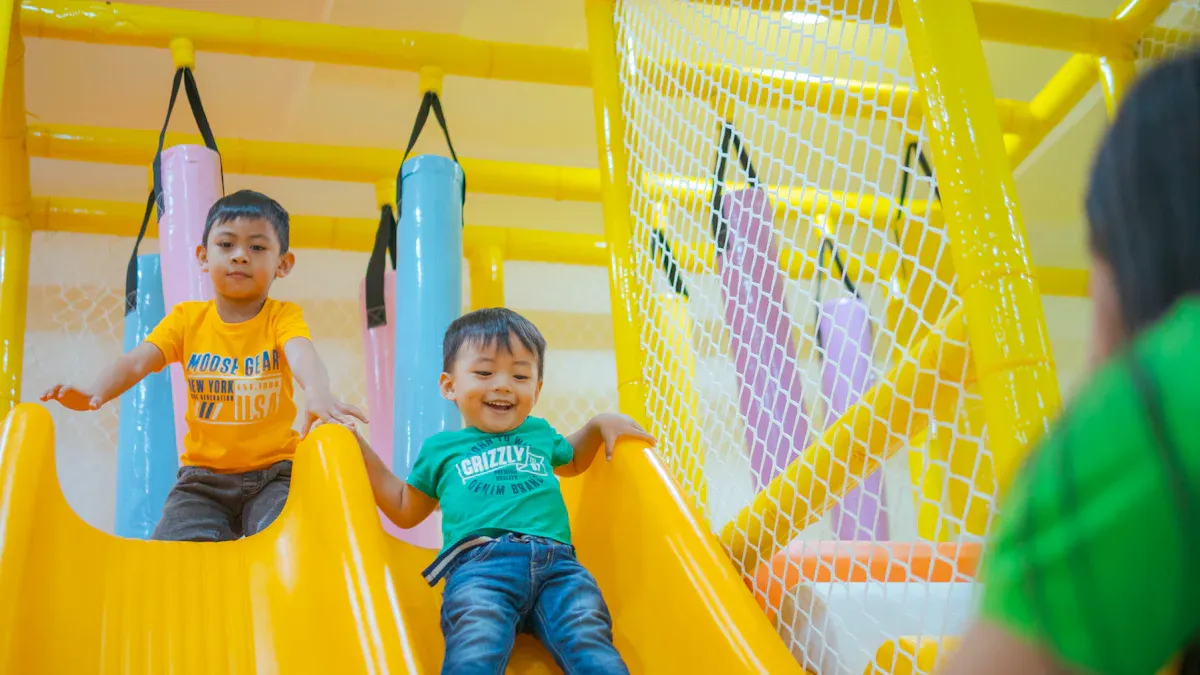
Choosing the right children’s indoor playground equipment can feel tough, but you can make it simple. Think about what keeps kids safe, what makes them smile, and what fits your space and wallet. When you focus on these smart ways, you set up a place where kids can play, grow, and stay happy. You have what it takes to pick the best.
Key Takeaways
- Always put safety first. Pick equipment with safety certifications like ASTM or EN1176. These certifications mean the equipment is high quality. They also help lower repair costs.
- Choose materials that are strong and safe. Make sure they are not toxic. Impact-absorbing materials help stop injuries. These materials also make the equipment last longer.
- Make cleaning easy by setting a cleaning schedule. Clean the playground often to keep it healthy. This shows parents you care about their kids’ safety.
- Pick equipment that fits the age of the kids. This keeps children safe and interested. Kids of different ages need different play structures to grow.
- Measure your space before you buy anything. Set a budget that works for you. This helps you make a safe and fun playground. It also makes sure you do not spend too much.
Safety First in Children’s Indoor Playground Equipment

Look for Safety Certifications
Safety certifications are very important when picking equipment. These certifications mean the playground follows strict safety rules. Equipment with international standards like EN1176 or ASTM helps keep kids safe. It also makes sure the equipment lasts a long time. Here are some key certifications:
| Certification | Region | Description |
|---|---|---|
| CE | Europe | Shows the product meets health, safety, and environmental standards. |
| ASTM F1918 | North America | Sets safety rules for soft enclosed amusement equipment. |
| EN 71 | Europe | Covers toy safety, including mechanical and fire risks. |
| EN 1176 | Europe | Focuses on design and maintenance for playground safety. |
| ISO | Worldwide | Sets global standards for quality and safety. |
Certified playground equipment means you get high quality and lower costs for repairs. Makers check every piece to make sure it is safe for kids. You avoid problems and keep your playground working well.
Choose Quality Materials
Materials are important for safety and how long equipment lasts. Impact-absorbing materials like EPE foam or PU vinyl are good for toddler areas. These materials help cushion falls and stop injuries. Here is how some materials compare:
| Material | Safety Benefits |
|---|---|
| Metal | Coated metal resists rust and burns. |
| Plastic | Easy to clean and less likely to cause burns. |
| Wood | Stays cool and can be treated to resist bugs and rot. |
Pick equipment made with strong, non-toxic materials. Stay away from cheap or badly made options. They might break quickly and can be unsafe for kids. If you care about nature, choose recycled plastics, wood from safe sources, or finishes with low VOC.
Plan for Easy Cleaning
Clean playground equipment often to keep kids healthy. Make a cleaning plan and show it to parents. Put hand sanitizers near doors and play spots. Teach your staff to clean places people touch a lot, especially when it is busy.
- Clean handrails and toys every day if lots of kids visit.
- Wipe all surfaces every week to stop dirt from building up.
- Deep clean every month to keep germs away.
- Use cleaning products safe for kids and color-coded cloths to stop germs from spreading.
- Follow local health rules and teach your team the best ways to clean.
If you clean equipment at least once a week, you help stop germs from spreading. Daily cleaning is best for busy playgrounds. Keeping things clean shows parents you care about their kids’ safety.
Age-Appropriate and Engaging Indoor Playground Equipment
Select for Age Group
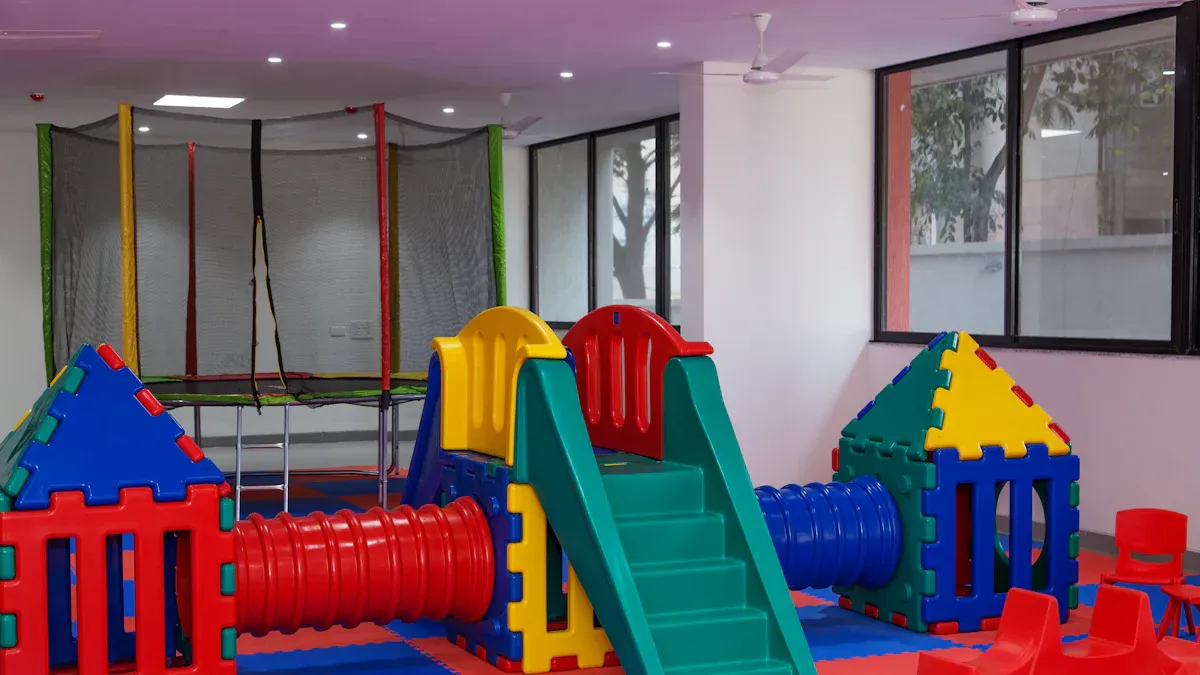
You want kids to feel safe and happy. Pick equipment that matches their age. Little kids need soft play and low steps. Older kids like climbing and big slides. Check this table to see what fits each age group:
| Age Group | Recommended Equipment | Description |
|---|---|---|
| 2 to 5 | Climbers, Ladders, Crawling Spaces, Smaller Steps | Good for young kids and helps them learn new skills. |
| 5 to 12 | Rope Climbing, Complicated Slides, Horizontal Bars | These help older kids grow stronger and solve problems. |
Choosing the right equipment for each age keeps kids safe and interested.
Offer Variety and Sensory Play
Kids enjoy having lots of choices. Mix old favorites with new sensory activities. Slides, climbing toys, and ball pits are fun. Sensory play, like painting, music, and textured toys, helps kids learn by touching and listening.
- Slides come in many sizes for different ages.
- Climbing toys and walls help kids move and grow.
- Ball pits help kids use their bodies and have fun.
- Sensory bins, sand or water play, and music help kids think and move.
Panels and swings make play more exciting. Swings help kids balance and get stronger. Play panels help kids solve problems and talk to others. Your play center can be a place where everyone joins in.
Support Developmental Growth
Playgrounds help kids grow in many ways. Different play types help kids learn new things. Here’s a table to show how play helps kids:
| Type of Play | Description | Supported Milestones |
|---|---|---|
| Solitary play | Kids play alone | Helps kids be creative and independent. |
| Parallel play | Kids play next to each other | Teaches kids about friends and respect. |
| Cooperative play | Kids play together and make rules | Builds teamwork and social skills. |
Ramps and special slides let all kids play together. When you offer many activities, kids get stronger, solve problems, and learn to work with others. Your choices help every child do their best.
Space, Budget, and Installation Planning
Measure Your Space
Start by looking at your space. You want every child to play safely and move around easily. Measure every wall and corner before you buy indoor children’s play equipment. Make sure you leave enough room between each play structure. This helps prevent kids from bumping into each other. Use soft flooring like rubber mats or foam tiles under and around the equipment. These surfaces cushion falls and keep everyone safe.
Tip: Check for sharp edges, open hooks, or gaps that could trap a child’s head or body. Clear pathways help kids and adults move around without trouble.
When you plan your layout, think about zones. Separate areas for toddlers and older children make your playground safer. Add wide paths for strollers or wheelchairs. This makes your kids’ play center more welcoming for everyone.
Set a Realistic Budget
You want the best indoor play structures for home or business, but you also need to watch your budget. Costs can change a lot depending on the size and type of playground. Here’s a quick look at average prices:
| Setting Type | Cost per Child | Total Cost for 10 Children | Total Cost for 100+ Children |
|---|---|---|---|
| Commercial Playground | $1,000 | $10,000 | $150,000+ |
Pick only the features your space and budget allow. Choose bright, easy-to-clean surfaces. Avoid too many nooks where dirt can hide. If you run a business, a fun playground can help families stay longer and buy more snacks or drinks. It can also make your place the top choice for birthday parties.
Consider Installation and Adaptability
Think about how you will set up your equipment. Plan your space so you can see all areas easily. Anchor everything well and use clear safety signs with simple pictures. After you finish, check every part for safety. Look for loose bolts or sharp spots.
Choose indoor playground equipment that can change as your needs grow. Flexible designs let you add new features or move things around. This helps your playground stay fun and safe for years. Make sure there is enough space for kids with different abilities, including those who use mobility devices.
A little planning now means fewer problems later. Your playground will be safer, easier to clean, and ready for every child.
You have learned three smart ways to choose indoor playground equipment. First, always think about safety and good quality. Next, pick things that fit kids’ ages and what they like. Last, plan for your space and how much you can spend. Use these ideas as a checklist when you shop. If you balance safety, fun, and what works best, you make a place where all kids can play and grow.
| ✅ Checklist Item | What to Look For |
|---|---|
| Safety | Non-toxic, padded, certified equipment |
| Age Appropriateness | Fits your children’s age and skills |
| Maintenance | Easy to clean, inspect, and repair |
| Space & Layout | Enough room for safe play and movement |
| Practicality & Budget | Affordable, flexible, and easy to adapt |
FAQ
What safety features should I look for in indoor playground equipment?
You should pick equipment with smooth, rounded edges. Make sure the frames are strong and will not tip over. Soft surfaces help protect kids if they fall. Look for safety certifications like ASTM or EN1176. Ask if the materials are non-toxic and safe for kids. Check that the equipment is anchored tightly. Safety signs should be easy to see and understand.
How do I know if equipment fits my child’s age?
Manufacturers tell you which ages can use each item. You can ask for advice based on your child’s age. Try to find equipment that can change as your child grows. Adjustable features are helpful for kids of different ages.
Can I clean playground equipment easily?
Most indoor playground equipment has smooth surfaces. You can clean them with safe cleaning products. Pick designs that do not have many small spaces. Cleaning every week helps stop germs from spreading.
What if my space is small?
- Pick play structures that do not take up much room.
- Use climbing walls or other tall equipment.
- Make different areas for kids of different ages.
- Soft mats help you use all your space safely.