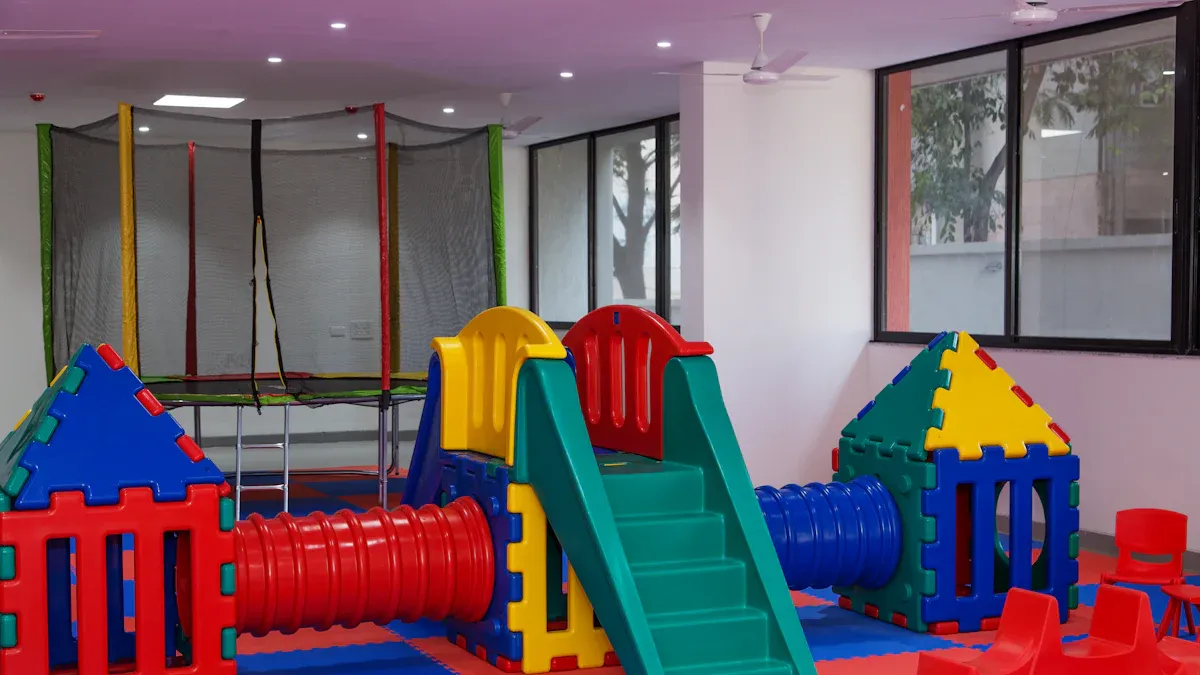
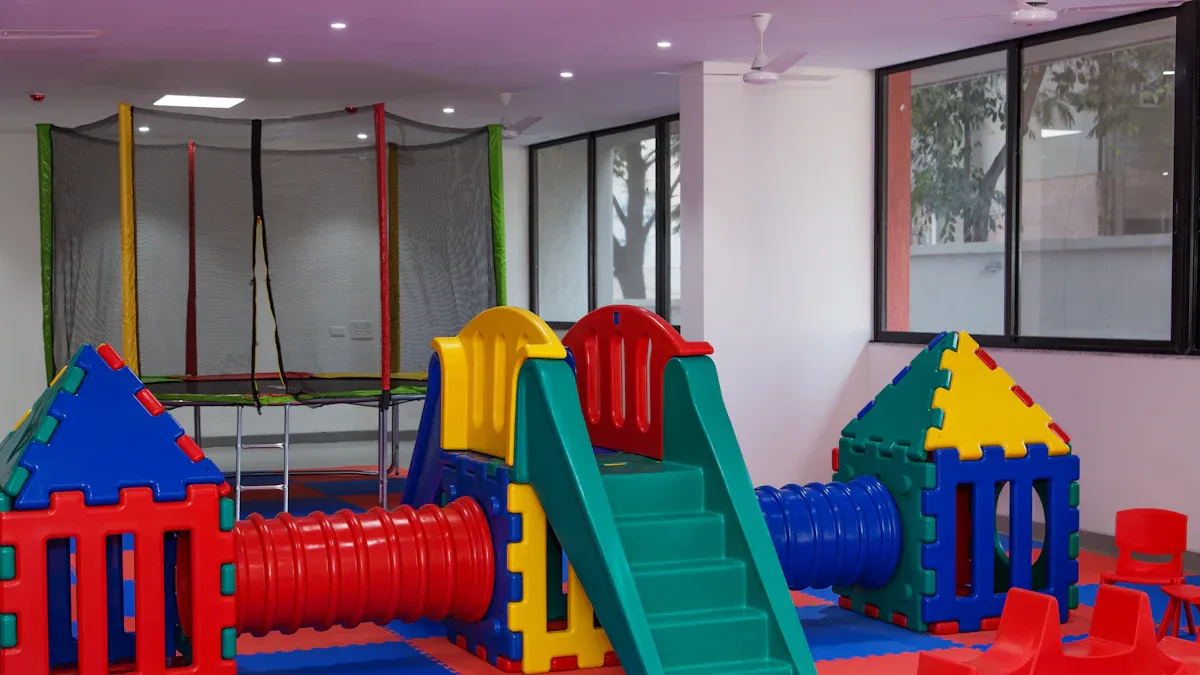
You want your children to play, laugh, and explore in a safe place. Picking a childrens indoor playground can feel tricky, but you have plenty of options. When you walk into a fun indoor playground, you look for bright colors, happy faces, and safe equipment. You know that a clean indoor playground makes playtime better. Trust your instincts, ask questions, and use this guide as your checklist. You can make every visit fun and worry-free.
Key Takeaways
- Make sure they check the equipment often. Weekly checks mean the playground cares about safety.
- See if the place is clean. Staff should clean things people touch a lot many times each day. This helps stop germs from spreading.
- Ask if the staff gets training. Staff who are trained can help in emergencies. They also keep kids safe.
- Check if there are different play areas for each age group. This stops accidents and makes kids enjoy playing more.
- Look for seats that are comfy for parents. Good seats help you relax while you watch your child play.
Indoor Playground Safety Standards

When you go into a childrens indoor playground, you want your child to be safe. Good safety rules make playtime fun and help you worry less. You can check for safety by seeing how often the indoor playground equipment is checked, how clean the place is, and how well the staff watches the kids. Let’s talk about what you should look for.
Routine Inspections and Equipment Maintenance
You want the indoor playground equipment to be safe every day. The best indoor playgrounds check their equipment at least once a week. Some places check every day, every week, every month, and every few months. These checks find problems before they get worse.
Here is what staff should do during maintenance:
- Check for rips, holes, or damage on all indoor playground equipment.
- Look at hardware and fasteners and change broken parts.
- Watch for loose wires or other dangers, especially near electrical equipment.
- Clean the playground by sweeping and mopping.
- Check busy areas every day for damage.
- Look for things that could make kids trip.
- Clean sandboxes and mulch often.
- Make sure water drains well so kids do not slip.
- Put oil on moving parts like swings and slides.
- Tighten bolts and screws that are loose.
Tip: Ask the staff how often they check the indoor playground equipment. Weekly checks are a good sign.
Safety rules for childrens indoor playground are different in each place. Here is a table with the most common ones:
| Standard | Region | Description |
|---|---|---|
| ASTM F1918-12 | USA | First safety standard just for indoor playgrounds. |
| EN 1176 | Europe | General safety rule for indoor and outdoor playgrounds. |
| AS 3533.4.2-2013 | Australia | Safety rule for indoor playgrounds. |
| CSA Z614-07(R2012) | Canada | Safety rule for indoor and outdoor playgrounds in Canada. |
Cleanliness and Hygiene Practices
Childrens indoor playground clean places are as important as safe equipment. Germs can spread fast in busy indoor playgrounds. You want to see staff cleaning things like door handles, slides, and tables three or four times a day. Every day, staff should clean bathrooms, take out trash, clean up spills, and vacuum or sweep main areas.
Here is a table with the best cleaning habits:
| Cleaning Frequency | Tasks |
|---|---|
| Daily | Clean high-touch surfaces, restrooms, take out trash, clean spills, vacuum or sweep. |
| Weekly | Clean play structures, wipe all surfaces, mop floors, clean seats, check air filters. |
| Monthly | Deep clean some areas, check equipment, clean hard-to-reach spots. |
| Periodic Deep Cleaning | Shampoo carpets or clean the whole playground, every few months. |
Note: If you see staff cleaning a lot, you know the indoor playground cares about germs.
Staff Supervision and Emergency Preparedness
The right number of staff for each child helps stop accidents. Here is a chart with the best staff-to-child ratios by age:
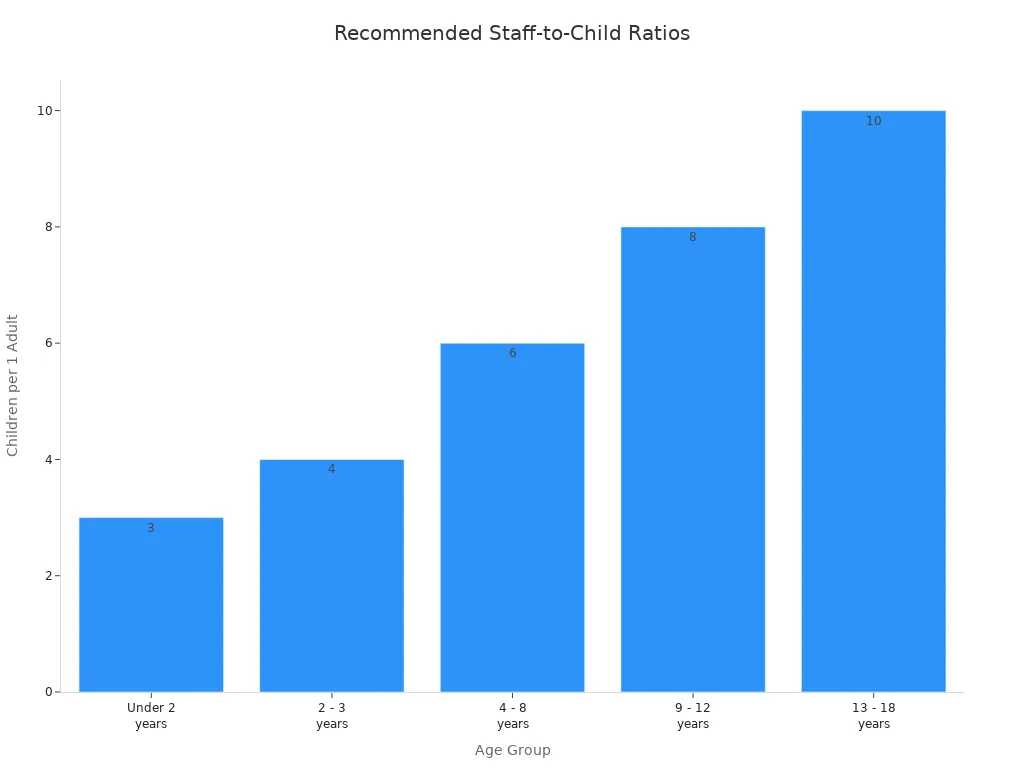
Staff need to learn about safety, what to do in emergencies, and first aid. They should know the rules, how to use childrens indoor playground equipment, and what to do if a child gets hurt. Staff practice drills to get ready for things like fires. CPR and first aid are very important.
Here is a table with important training:
| Training Aspect | Description |
|---|---|
| Safety Training | Learn safety rules and what to do in emergencies. |
| Emergency Response | Staff know how to help kids and handle emergencies. |
| First Aid Training | Help with small injuries like cuts or bumps. |
| CPR Training | Help in medical emergencies. |
| Regular Drills | Practice what to do in emergencies. |
| Regular Refreshers | Keep learning to stay up to date. |
Callout: Ask about staff training and emergency plans. Well-trained staff make a big difference in safety.
Soft Padding and Injury Prevention
Kids fall, but good padding can stop bad injuries. Most injuries in childrens indoor playgrounds happen from falls. About 75% to 80% of playground injuries are from falls, and almost half are from falling to the ground. You want to see soft floors and padding around climbing areas and slides.
Here is a table with popular padding:
| Material Type | Cost per sq ft | Lifespan | Fall Protection Height |
|---|---|---|---|
| Rubber Tiles | $5-8 | 10-15 years | Up to 10 ft |
| Poured Rubber | $7-15 | 8-12 years | Seamless installation |
| Engineered Wood Fiber | $1-3 | Needs topping up | Up to 25 ft |
| Rubber Mulch | $4-6 | Not much care needed | Loose-fill option |
| Cork Surfacing | N/A | N/A | Eco-friendly choice |
Rubber mats, foam padding, and fake grass help soften falls and lower injuries. Most indoor playgrounds use these to keep kids safe. There should be soft surfaces around all indoor playground equipment, especially climbing things and slides.
Safety tip: Look for soft padding under and around all play equipment. Good padding means fewer injuries and you can relax more.
Quick Checklist for Parents
- Look for weekly or daily checks of indoor playground equipment.
- Watch for lots of cleaning, especially on things kids touch a lot.
- Ask about staff training and practice drills.
- Check staff-to-child ratios for good supervision.
- Make sure soft padding is on all play areas.
When you use this checklist, you help keep your kids safe and happy every time you visit a childrens indoor playground.
Age-Appropriate Play Areas
Separate Zones for Toddlers and Older Kids
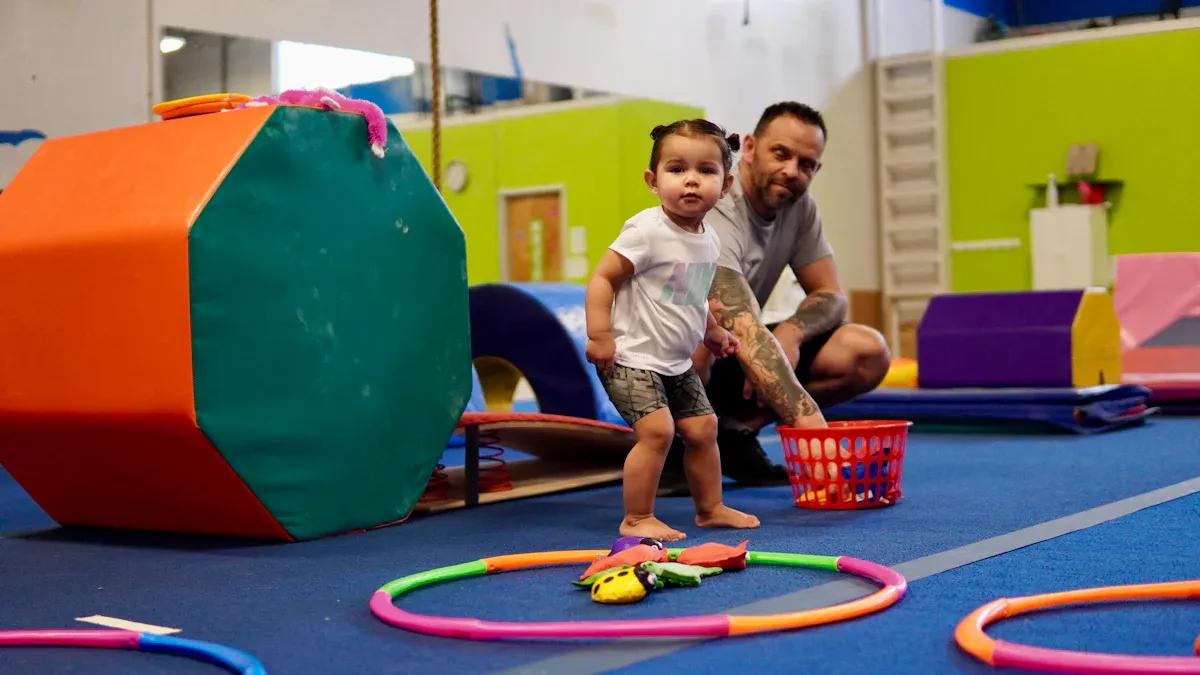
When you enter a childrens indoor playground, look for clear zones for each age group. Having separate play areas keeps everyone safe and happy. Toddlers need soft spaces to crawl and play. They should not bump into bigger kids. Older kids like bigger climbing things and active games. If you mix ages, accidents can happen. Little kids might feel scared or left out.
Here’s why separate zones are important:
| Aspect | Toddlers | Older Children |
|---|---|---|
| Safety | Soft, safe places to explore | Bigger play areas for more action |
| Developmental Activities | Gentle play for their age | Climbing and energetic activities |
| Risk of Injury | Less risk from older kids | More physical play and movement |
Most indoor playgrounds use age rules for their zones. You can check the age ranges for each play area:
| Play Zone | Recommended Age Range |
|---|---|
| The Play Lab | 9 months to 7 years |
| Play Street Museum | 8 years and under |
| Good Day Play Cafe | 0 to 6 years |
| Kids N’ Shape | 3 to 12 years |
| Kanga’s Indoor Play Center | 1 to 11 years |
| Flying Apple | 10 years and under |
Tip: Ask staff about age rules for each play zone. This helps you find the right spot for your child.
Suitable Equipment for Each Age Group
You want your child to use childrens indoor playground equipment that fits their age. Toddlers need low, soft things with rounded edges. These help them play safely and learn new skills. Padded floors and safe toys protect them from getting hurt.
Here’s what to look for in toddler areas:
| Feature | Description |
|---|---|
| Age-Appropriate Play Equipment | Made for ages 1–3, with low heights and rounded edges. |
| Soft and Padded Flooring | Foam or rubber floors to lower injury risk. |
| Non-Toxic, Child-Safe Materials | Toys and materials that are safe and BPA-free. |
- Lets kids explore and learn safely.
- Helps them build small muscle skills.
- Gives sensory play for brain growth.
Toddler equipment helps your child learn by exploring. You will see them use their hands and enjoy sensory play. This helps their brains and social skills grow. It also helps with talking and sharing.
Older kids need bigger challenges. You will see climbing walls, obstacle courses, and fun play areas for active play. Operators follow safety rules and keep space around equipment. They use soft mats or wood chips to protect from falls. Age and weight rules keep everyone safe.
- Manufacturers and staff follow safety rules.
- Indoor playgrounds keep space around equipment.
- Equipment comes from trusted companies.
- Soft surfaces protect kids from falls.
- Separate zones lower injury risks.
- Age and weight rules keep play safe.
- Groups like CPSC and ASTM set safety standards.
Callout: Always check for posted age and weight rules before your child plays.
Inclusive and Sensory Play Options
You want every child to feel welcome at a childrens indoor playground. Inclusive features let all kids join the fun. Look for ground-level activities, ramps, and sensory equipment. These help kids with disabilities play, learn, and make friends.
Here’s a table with inclusive features for each play stage:
| Play Stage | Inclusive Features |
|---|---|
| Solitary play | Play panels for kids to explore alone. |
| Onlooker play | Equipment set up for watching others. |
| Parallel play | Spiral slides for listening and watching. |
| Associative play | Things for playing alone with some interaction. |
| Cooperative play | Playground parts that need teamwork. |
You will also find:
- Ground-level activities for wheelchairs.
- Ramps for higher play areas.
- Special slides for sensory play.
Sensory play makes childrens indoor playgrounds fun for all kids. These activities help kids build muscle skills and learn about their senses. Sensory play helps with talking, social skills, and confidence.
| Benefit | Description |
|---|---|
| Develops Motor Skills | Helps kids use big and small muscles by climbing and stacking. |
| Improves Sensory Integration | Helps kids process sights, sounds, and touch for learning. |
| Builds Speech and Language Skills | Helps kids talk about what they do and learn new words. |
| Encourages Social Interaction | Helps kids share and play together, learning social skills. |
| Improves Emotional Development | Helps kids understand feelings and learn about cause and effect. |
| Develops a Sense of Self | Lets kids find out what they like and what they are good at. |
- Helps kids reach new milestones.
- Sensory play lets kids explore textures, sounds, colors, and smells.
- Inspires kids to be creative and express themselves.
Note: Inclusive and sensory play options make every visit more fun for all kids.
Amenities for Parents and Kids
Parent Seating and Visibility
You want to relax while your child plays. Soft chairs and tables help parents feel comfortable. Many indoor playgrounds have special spots just for parents. Some play cafés let you sit, watch your child, and have a snack or coffee. This setup helps you feel calm and lets you watch your child easily. Comfortable rest areas make your visit better. You can stay longer when you feel good. Good experiences make you want to come back.
- Cozy seating helps you enjoy your time.
- You can stay longer if you feel relaxed.
- Happy visits make you want to return.
Tip: Pick seats where you can see the play zones. You can watch your child and relax at the same time.
Accessibility and Convenience
You want everyone in your family to feel welcome. Indoor playgrounds must have features for accessibility. Ramps, wide paths, and transfer supports help kids with mobility needs play too. Some places have stroller parking and nursing rooms. These features make your visit easier and less stressful.
| Requirement | Specification |
|---|---|
| Height of top surface | 11–18 inches |
| Minimum width | 24 inches |
| Minimum depth | 14 inches |
| Maximum height of transfer steps | 8 inches |
| Clear floor space dimensions | 30 x 48 inches |
| Slope for clear floor space | Not steeper than 1:48 |
| Transfer supports | Required on platforms and steps |
| Connected elevated components | Must provide access to other areas |
Note: Stroller parking and nursing rooms help you take care of your child in busy play areas.
Food, Restrooms, and Rest Areas
You might need a snack or a break while you visit. Many indoor playgrounds have cafés or snack bars. These places must follow health and safety rules for food and cleanliness. Clean restrooms are important for families. Look for small toilets and baby-changing stations. These things make your visit easier and more comfortable.
| Feature | Importance |
|---|---|
| Clean Restrooms | Keeps your family comfortable and healthy |
| Child-sized Toilets | Makes bathroom trips easier for young children |
| Baby-changing Stations | Helps parents with infants and toddlers |
| Food Safety Standard | Description |
|---|---|
| Health and Safety Permits | Makes sure food is safe and clean |
Callout: Pick playgrounds with clean restrooms, safe food, and quiet rest spots. Your whole family will enjoy these comforts.
Policies and Reviews for childrens Indoor Playground
Admission, Waivers, and Safety Policies
When you go to a childrens indoor playground, you will see rules. Most places want you to sign a waiver before play. This shows you know the risks and helps everyone stay safe. You will find rules about watching your child, age limits, and what you can bring. These rules keep kids safe and help families have fun.
Here is a quick list of common playground rules:
| Policy/Rule | Description |
|---|---|
| Waiver Requirement | You must sign a waiver before your child can play. |
| Supervision | Parents or guardians must watch children at all times. |
| Age Restrictions | Only children 10 years or younger can use the equipment. |
| Health Regulations | Shoes stay off, socks go on. |
| Food and Drink | No food or drinks in the play area. |
| Liability | The playground is not responsible for lost items. |
| COVID-19 Warning | You accept all risks related to COVID-19. |
You may see these rules posted at the entrance:
- Adults must watch kids at all times.
- No shoes, gum, or food in play areas.
- Play at your own risk.
These safety rules help keep kids safe. Age zones, equipment checks, and clothing rules work together. When you follow the rules, you help make the playground safe for everyone.
Tip: Read the rules when you arrive. If you do not understand something, ask the staff before your child plays.
Reading Parent Reviews and Feedback
You want to know what other families think before you visit. Parent reviews tell you about safety, cleanliness, and fun. Look for comments about soft floors, safe equipment, and clean bathrooms. Many families write reviews on Google or social media. This helps you know what to expect.
Here is a table to help you find important things in reviews:
| Key Factors | What to Look For |
|---|---|
| Safety First | Cushioned floors, safe play structures, and clear emergency exits. |
| Cleanliness | Clean high-touch areas, tidy restrooms, and hand sanitizer stations. |
| Age-appropriate Areas | Separate spaces for toddlers and fun zones for older kids. |
| Customer Reviews | Honest feedback about the playground’s atmosphere and hygiene. |
Parent feedback helps playgrounds get better. If families talk about safety or design problems, owners often fix them. Your review can help other families pick a good place for their kids.
Note: Share your experience with others. If you find a great playground, let other families know!
Tips for a Fun Indoor Playground Visit
Planning and Reservations
You want your trip to an indoor play park to go smoothly. Planning ahead helps you avoid crowds and gives your child more time with interactive play structures. If you visit during busy times, you might feel rushed or miss out on favorite zones. Try these strategies to make your visit better:
| Strategy | Description |
|---|---|
| Early morning arrivals | Arrive within 15 minutes of opening for a calm indoor play park experience. |
| Weekday mornings (9-11 am) | Enjoy quieter play, perfect for toddlers or sensory-sensitive kids. |
| Early weekday afternoons (1-3 pm) | Visit after lunch for lighter crowds before school lets out. |
| Zone shifting | Explore less popular areas first, then return to favorite zones later. |
| Timing adjustment | Arrive 30-45 minutes earlier or use the lunch-break window. |
| Alternative planning | Have backup activities ready for busy days. |
Booking your spot online can help you skip lines. Some indoor play parks offer reservations, so you know you have a place.
What to Bring for Safety and Comfort
Packing the right items makes your indoor play park visit safer and more comfortable. You want your child to enjoy every moment without worries. Here’s a quick checklist:
- Choose clothing that fits well and does not have loose parts.
- Pick shoes that grip the floor and avoid slippery soles.
- Leave hand chains, belts, and necklaces at home to lower injury risks.
You might want to bring water, snacks, and wipes. These help your child stay refreshed and clean. A small first aid kit can be handy for minor scrapes.
Encouraging Safe Play and Taking Breaks
You want your child to have fun and stay safe at the indoor play park. You can boost engagement by joining in activities and watching your child. Try these ideas:
- Encourage screen-free play for more creativity and peer interaction.
- Join your child in games to increase engagement and supervision.
- Suggest regular breaks so your child can rest and recharge.
- Look for structured activities that include breaks.
- Ask staff for safety tips and stay involved in supervision.
Designing indoor playgrounds with rest zones and interactive play structures helps kids play safely. When you take breaks and stay involved, your child enjoys the indoor play park even more.
You now have a simple plan for picking the best indoor playground. Check for safety, clean spaces, and age-appropriate play zones. Use the tips and tables in this guide as your checklist. When you focus on safety and fun, you create great memories for your family.
You know your child best. Trust yourself and choose with confidence!
FAQ
What should my child wear to an indoor playground?
You want your child to wear comfy clothes that let them move. Choose socks with grips if the playground requires them. Avoid jewelry, scarves, or anything that could get caught. Simple outfits help your child play safely.
Can I bring my own snacks and drinks?
Most indoor playgrounds do not allow outside food or drinks. You can check with the staff before your visit. Many places have cafés or snack bars. If your child has allergies, let the staff know.
How do I know if a playground is clean?
You can look for staff cleaning often. Check if the bathrooms and tables look tidy. Read parent reviews for comments about cleanliness. Clean spaces show the playground cares about your child’s health.
What if my child gets hurt while playing?
Staff should know first aid and help right away. You can ask about their emergency plan before your child plays. Keep your phone handy in case you need to call for help.
Are indoor playgrounds safe for toddlers?
Yes, if the playground has a toddler zone with soft floors and age-appropriate toys. You should always watch your child. Ask staff about safety rules for little ones.