
You want your kids to have a blast at the trampoline park, but safety always comes first. With about 800 Bounce trampoline park open in the U.S., these spots attract families every day. Did you know:
- 74% of jumpers at Bounce trampoline park are kids
- 90% of trampoline injuries involve children ages 5-15
You can help your child stay safe and happy with just a little planning.
Key Takeaways
- Go over safety rules with your child before they jump. Knowing the rules helps stop accidents and keeps everyone safe.
- Put your child in clothes that fit well and grip socks. This lowers the chance of getting hurt and helps them jump with confidence.
- Watch your child closely while they jump. Being there makes them feel braver and helps you see risky moves before they cause accidents.
Follow Trampoline Park Safety Rules

When you walk into a bounce trampoline park, you see lots of excited kids ready to jump. You want them to have fun, but you also want to keep them safe. That’s why you need to pay close attention to all the safety rules posted around the park. These safety rules help prevent accidents and keep everyone smiling.
Review Rules with Kids
Before your child starts jumping,take a few minutes to go over the safety rules together. You can even make it a game by asking questions or letting your child point out the rules they see. bounce trampoline park parks have clear signs and friendly staff who remind you to follow park marshal instructions. Here’s a quick look at some common safety rules you’ll find:
| Safety Rules | Description |
|---|---|
| Always | Remove street shoes and wear SkySocks. |
| Always | Follow all park rules and Team Member instructions. |
| Always | Walk on and off court. |
| Do not | Dive head first over arms or land on your head or neck. |
| Do not | Double bounce or affect another jumper’s bounce in any way. |
| Do not | Continue jumping if a guest enters your trampoline space. |
| Unattended Children | Children under the age of 13 cannot be left alone without parent or guardian supervision. |
You help your child understand why these safety rules matter. You also show them how to follow park marshal instructions, which keeps everyone safe.
One-at-a-Time on Angled Trampolines
Angled trampolines look exciting, but they need extra care. You should remind your child about the safety rules for these areas. Only one person should jump at a time. If more than one jumper lands on an angled trampoline, injuries can happen. In fact:
- Injuries from multiple jumpers ignoring the one-at-a-time rule make up 10% of all trampoline injuries.
You keep your child safe by making sure they wait their turn. You also help other families enjoy trampoline park safety. When you follow these safety rules, you create a safer and happier experience for everyone.
Dress Smart for Safety
What your child wears at the trampoline park can make a big difference in how safe and comfortable they feel. The right outfit helps them move freely and lowers the risk of accidents. You want your child to focus on fun, not fussing with clothes or worrying about getting hurt.
Avoid Loose Clothing and Jewelry
Loose clothing and jewelry might seem harmless, but they can cause problems when your child is bouncing around. Loose shirts or baggy pants can get caught on equipment or block your child’s view. Jewelry like rings, necklaces, or bracelets can snag on trampolines or even other jumpers. This can lead to painful accidents or lost items.
| Risk Type | Description |
|---|---|
| Jewelry Risks | Rings, necklaces, and other accessories can cause injuries or get damaged. They might get caught on trampoline parts or other jumpers. |
| Loose Clothing Risks | Loose clothing can cause visibility issues or catch on equipment, increasing the risk of injury. |
You can use lockers at most parks to store loose items and jewelry before your child starts jumping. This keeps their hands and body free for safe play.
Tip: Tie up long hair to keep it from getting tangled while bouncing.
Wear Grip Socks
Grip socks are a must at most bounce trampoline park. They help your child stay steady on the mats and reduce the chance of slipping. Regular socks can be slippery, but grip socks have special bottoms that give extra traction. This means your child can jump, land, and run with more confidence.
- Grip socks lower the risk of slipping during jumps and landings.
- They help stabilize foot movements and prevent falls.
- Grip socks keep feet clean and follow park safety rules.
Let your child pick a fun pair of grip socks. It adds excitement and keeps them safe at the same time!
Supervise and Engage

Active Supervision
You help keep your child safe at the trampoline park. Stay close and watch your child jump. You can spot risky moves before accidents happen. Your child feels more confident when you are nearby. Staff members watch each area, but you add extra safety.
Look at how parks use staff to protect kids:
| Zone Type | Typical Age Range | Staffing Requirements |
|---|---|---|
| Toddler Zone | 3-5 years | 1 staff per 15 kids |
| Youth Zone | 6-12 years | 1 staff per 20 kids |
| General/Adult Zone | 13+ years | 1 staff per 25 participants |
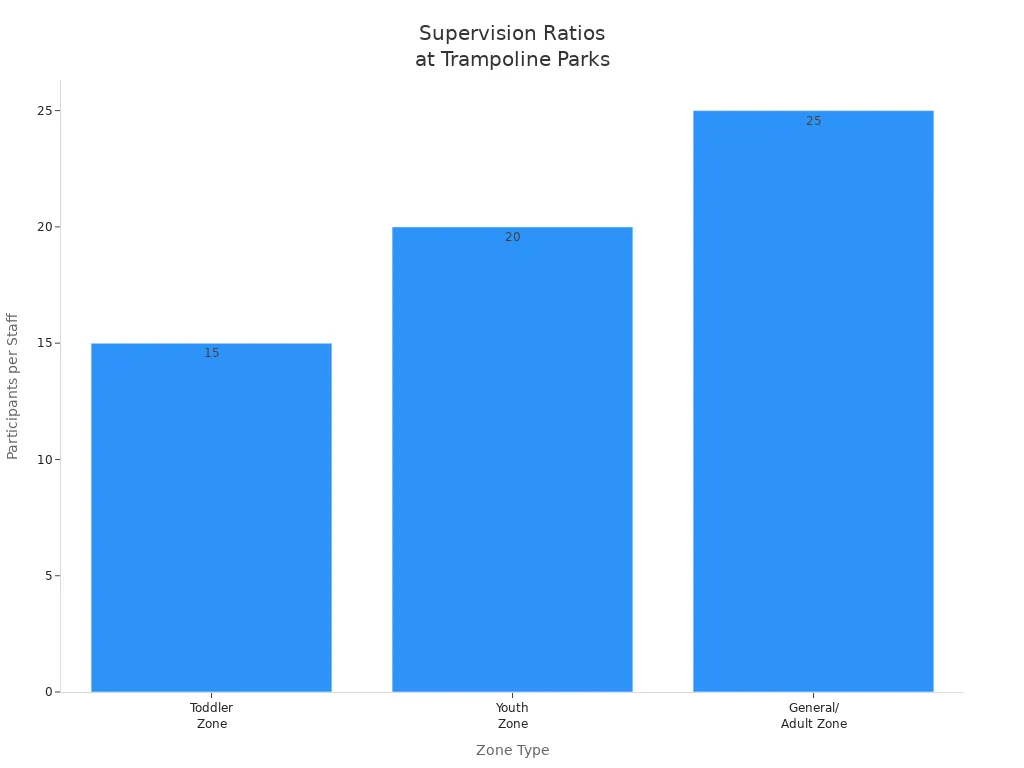
Younger kids need more attention from adults. When you stay close, you help staff keep everyone safe and happy.
Tip: Put your phone away and join the fun. Kids love when you watch or cheer for them!
Set a Good Example
Kids watch what you do and learn from you. If you follow rules and wait your turn, your child will too. Staff are trained to spot unsafe moves and help jumpers. Your actions matter a lot.
Here’s how staff training helps keep everyone safe:
| Step | Focus Area | Impact |
|---|---|---|
| 1. Safety & Compliance Education | Understanding ASTM F2970, jumper to monitor ratio, rules enforcement | Reduced incidents and conflict frequency by up to 40% |
| 2. Communication & De-escalation Training | Role-playing, body language recognition, active listening | Increased staff confidence by 50% |
| 3. Clear Policies & Staff Empowerment | Consistent code of conduct, authority levels | 60% fewer escalated conflicts |
| 4. Ongoing Training & Assessment | Quarterly workshops and scenario testing | Sustained reduction in injuries and disputes |
When you respect the rules and play safe, you help everyone. Your child will feel proud to copy you and stay safe while having fun.
Teach Safe Jumping Techniques
You want your child to have fun at the trampoline park, but you also want to keep them safe. Teaching safe jumping techniques is one of the best ways to prevent injuries and make sure every visit is a happy one.
Land on Both Feet
Landing safely is the most important skill for any trampoline jumper. You should always remind your child to land on both feet. This helps keep their body balanced and lowers the risk of falling or twisting an ankle. Most bounce trampoline park teach this technique during safety briefings and post signs around the park.
Here are some simple tips for safe landings:
- Land with both feet flat on the trampoline.
- Keep knees slightly bent to absorb the bounce.
- Tuck arms close to the body if falling to prevent wrist injuries.
- If your child loses control, teach them to ball up and protect their head.
- Listen to referees and staff for safety instructions.
Tip: Encourage your child to jump in the center of the trampoline and avoid jumping too high. This helps prevent injuries and keeps them in control.
Avoid Risky Tricks
Bounce trampoline park look exciting, but risky tricks can lead to serious injuries. You should talk to your child about the dangers of flips, somersaults, and stunts. Most injuries at Bounce trampoline park happen because of bad landings or trying tricks beyond their skill level. Cervical spine injuries, traumatic brain injuries, and lower extremity injuries are common when kids attempt risky moves.
Here’s what you can do to prevent injuries:
- Set a rule: no flips, no double flips, and no somersaults.
- Remind your child to jump within your abilities.
- Only one person should jump on a trampoline at a time.
- Supervise your child and watch for unsafe moves.
- Pace yourself and take breaks to avoid fatigue.
Bounce trampoline park help educate visitors about these dangers with safety briefings and posted guidelines. You can support these efforts by talking with your child before they jump. When you teach safe jumping techniques, you help prevent injuries and keep the trampoline park a fun place for everyone.
Choose Age-Appropriate Zones
Guide Kids to Right Areas
You want your child to have fun, but you also want them to stay safe. Bounce trampoline park often have different play zones for different age groups. When you arrive, look for signs that show which areas are for toddlers, young kids, or older jumpers. Staff members can help you find the right spot if you are not sure.
- Toddler-only zones keep little ones away from bigger, faster jumpers.
- Some parks have special areas just for children under 5.
- Older kids and teens usually have their own sections with more space and bigger trampolines.
You can walk around with your child and point out the different zones. Let them know which area is best for them. This helps your child feel confident and safe while they play.
Tip: Ask a staff member if you are unsure about which zone fits your child’s age. They are happy to help!
Why Age Zones Matter
Age-appropriate zones do more than just organize the park. They protect your child from bumps, falls, and accidents. Younger kids move slower and need more space to practice jumping. Older kids jump higher and play rougher. Mixing age groups can lead to injuries.
When you guide your child to the right area, you lower the risk of accidents. You also help other families enjoy their time at the park. Everyone gets to jump, laugh, and play safely. That’s what makes the trampoline park a great place for all ages!
Arrive Early and Avoid Crowds
Benefits of Early Arrival
You want your family to have fun at the trampoline park. Getting there early helps you start the day right. Your kids get more room to jump and play. You can choose a great spot for your family. There is no need to hurry or rush. Staff are ready to help and give you extra attention.
If you come in the morning, lines are short. You do not have to wait long for activities. Your family can try different zones without feeling crowded. You also get first pick of lockers for your shoes and bags. Starting early makes everyone feel happy and ready for fun.
Tip: Eat breakfast together before you go. A good meal gives your family energy for jumping and playing.
Less Risk, More Fun
Smaller crowds make the trampoline park safer for your family. Fewer kids jumping at once means fewer accidents. Did you know 75% of trampoline injuries happen when many kids jump together? If you avoid busy times, your family stays safer and can relax.
Bounce trampoline park use smart ways to keep your family safe:
- Airbags give soft landings and help with busy spots.
- Staff watch airbag zones and guide your family.
- CCTV cameras help staff see problems and control jump areas.
- Visitor flow management gives each family enough space.
| Strategy | Impact on Safety and Crowd Control |
|---|---|
| CCTV Surveillance | Staff can watch your family and help fast. |
| Staff Training | Trained staff keep your family safe and happy. |
| Airbags | Soft landings mean more fun for your family. |
| Visitor Flow Management | Your family gets more space and a better time. |
| Compliance with Safety Standards | Your family enjoys a safe, worry-free visit. |
When you arrive early, your family has more fun and less stress. You make great memories and keep everyone smiling.
Hydration and Breaks: Safety Tips
Remind Kids to Drink Water
You want your child to stay safe while jumping. Drinking water is very important for safety. Kids use lots of energy when they jump. They need water before, during, and after play. If you forget, dehydration can happen quickly. Watch for dizziness, nausea, headache, or a fast heartbeat. These are signs your child needs water. Use these tips to help your child feel good.
Here’s a simple hydration table to follow:
| Timing | Recommendation |
|---|---|
| Pre-activity | Drink about 16 oz. of water 30-60 minutes before jumping. |
| During activity | Drink 4 to 8 oz. of fluids every 15-20 minutes. Take breaks every 20 minutes for hydration. |
| After activity | Keep drinking water. For every pound lost, replenish with 20 oz. of fluid. |
Water is the best drink before jumping. If your child jumps for more than an hour, you can give a sports drink. This helps with energy and prevents cramps. These tips help stop tiredness and keep kids safe. Always keep a water bottle nearby and watch your child.
Encourage Regular Rest
Kids get excited and sometimes forget to take breaks. You can help them slow down and rest. Taking breaks is part of staying safe. Every 20 minutes, ask your child to sit and drink water. Remind them to look around and be careful. This helps them recover and lowers accident risk.
Try these tips for a safer visit:
- Set a timer for breaks.
- Watch for signs of tiredness.
- Remind your child to be aware of your surroundings.
- Encourage them to stretch and relax between jumps.
You help your child follow safety tips and enjoy jumping. When you remind them to rest, you keep them happy and healthy. These tips help everyone have fun and stay safe.
You want your kids to have the best experience at the trampoline park. Give a safety prep talk before you go. Remind kids to follow the rules, listen to safety instructions, and keep one person per tramp. One person at a time means a safe experience. When you combine fun and safety, kids thrive!
- Clear rules like one person at a time and no rough play help kids stay safe.
- Supervision and safety instructions make every visit better.
- Kids build strong bodies, happy minds, and teamwork skills when you mix safety and fun.
FAQ
What should you do if your child feels nervous at the trampoline park?
You can walk around together first. Point out the fun zones. Remind your child that staff care about safety. Let them start with small jumps.
Can you bring your own grip socks to the trampoline park?
Most trampoline park locations let you use your own grip socks. Ask staff before you jump. Grip socks help with safety and keep feet clean.
How often should you remind kids about safety rules at the trampoline park?
You should review safety rules before jumping. Repeat them during breaks. Kids remember better when you talk about safety often at the trampoline park.
Tip: Use a checklist for trampoline park safety. Kids love checking off each rule before they play at the trampoline park!
| trampoline park Safety Checklist | Done? |
|---|---|
| Wear grip socks | ✅ |
| Drink water | ✅ |
| One person per trampoline | ✅ |
| Follow staff instructions | ✅ |