

How to Import Indoor Playground Equipment from China Step by Step
You want to open or upgrade a play space, and you have decided to get indoor playground equipment from China. This guide walks you through the full import journey step by step. It starts with finding China indoor playground equipment suppliers and ends on the day your playground opens.
You will learn how to import indoor soft playground from China. The roadmap covers five phases: supplier sourcing and vetting, design and quotation, shipping and customs clearance into the USA, inspection, and installation planning. Each phase builds on the last. Follow the steps in order, and you can move your equipment from a factory floor in China to a finished play space. You will have fewer surprises and better control over cost and timeline.
Key Takeaways
- Find trustworthy suppliers by checking factory papers and safety certificates.
- Get a custom design and a clear price quote before you pay any deposit.
- Pick the right shipping terms and container size to keep costs down.
- Check the equipment at every step of production to find problems early.
- Plan your schedule with extra time so you can avoid delays and added costs.
Why Import Indoor Playground Equipment from China
Cost and Customization Benefits
Chinese factories give you clear cost savings on indoor playground equipment. Lower production costs and efficient manufacturing let you fit more play value into your budget. Material and labor savings show up in your quote, so you can compare options without stretching the project budget. You get a finished play space at a price that helps your investment pay off faster.
Customization is the second big benefit of sourcing from China. You share your site size and CAD file, and the factory sends back a free design plan. They also give you free modification drawings with suggestions for changes. You can ask for OEM/ODM service and choose themed parts like ball pits, slides, climbing frames, rainbow nets, and trampolines. This flexibility fits any commercial indoor playground equipment project, large or small. A custom layout uses your space well and gives your venue a look all its own.
Turnkey Service and Product Range
Many China suppliers offer a one-stop service model. They handle design, production, shipping, installation, and operational guidance. Top turnkey brands send engineers to your country to install and set up the equipment on site. They also offer operational training and park operation consulting. This support helps you open on schedule and run the venue with confidence from day one.
The product range includes themed indoor playgrounds, indoor soft playground units, toddler playgrounds, trampoline parks, ninja warrior courses, and rope playgrounds. You can add a second indoor soft playground zone for younger visitors. One partner can equip a family entertainment center or a compact play zone, which makes your import project simpler and keeps quality consistent.
Liben Play shows what a strong China-based partner looks like. The company runs two production bases and has finished over 1,500 projects in 80 countries. Liben Play provides turnkey indoor playground equipment solutions, from design to installation. Importing from an experienced manufacturer like this lowers your risk at every step, from customs clearance to opening day.
Find China Indoor Playground Equipment Suppliers
Sourcing Channels: B2B Platforms, Google, and Trade Shows
Begin your supplier search where the most options are. B2B platforms link you to manufacturers and trading companies at good prices. Three platforms work well for commercial indoor playground equipment:
| B2B Platform | Website |
|---|---|
| Alibaba | https://www.alibaba.com |
| Made-in-China | https://www.made-in-china.com |
| Global Sources | https://www.globalsources.com |
Google searches help you reach a china indoor playground manufacturer directly. Search product terms plus city names, such as Qiaoxia in Wenzhou, a well-known production hub. Trade shows give you the best first impression. The China Beijing Attractions Expo runs March 17–19, 2027, at the Capital International Exhibition and Convention Center. The China Association of Amusement Parks and Attractions organizes it, with 600 exhibitors and 60,000 visitors across 60,000 square meters. Exhibitors display playground equipment, soft-play units, trampolines, rope courses, and climbing walls. You can touch the products and meet the people who build them.
Vetting Indoor Playground Equipment Suppliers
A nice website does not prove factory ownership. Ask one direct question: who really makes the equipment? A real commercial playground equipment factory china operator gives you production access and shares engineering records. A trading company often hides its source factory. Ask for editable layouts, revision records, and the final bill of materials. Then confirm the factory address and ask for a video tour tied to your specific products. Check the legal company identity, the registered business scope, and the company name on shipping documents.
Build a vetting checklist before you commit. Confirm factory capability: independent workshops for metal, woodwork, soft play, and painting, plus CNC cutting and robotic welding. Confirm export experience and ask whether the supplier has shipped to the USA before. For US buyers, check awareness of ASTM playground standards, such as ASTM F1487, and request a test report from an accredited laboratory. Verify EN1176 reports against the exact equipment you plan to import. Look up ISO 9001 certificate numbers on the issuing body’s register.
Strong credentials look like this: Liben Play holds ISO 9001, GS, and combined EN and ASTM certification. Treat certificates as a starting point, not a finish line. Match every report to your quoted model and check the issue date against the current standard edition. Careful supplier sourcing at this stage protects your shipping and customs steps later, and it keeps your playground project on solid ground.
Design and Quotation for Indoor Playground Equipment
From Site Info to 3D Rendering
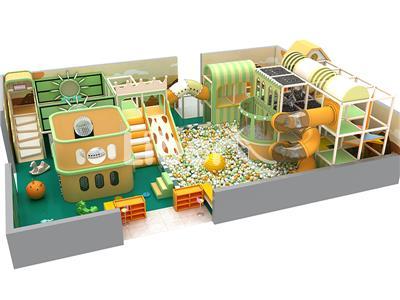
Design begins with your space, not with equipment. Give the supplier your floor plan, ceiling height, and column positions. Share photos of the area and mention any renovation work you have planned. Ask your engineer or architect about load-bearing capacity, lighting, ventilation, emergency exits, and wheelchair access. These building details decide what the factory can safely build for you.
Next, explain how children will use the space. Tell the supplier the age range you serve and the kinds of play you want to encourage. Also describe how independent your youngest visitors are. Plan seating around the edges for adults, with clear views of every play zone. Set your play capacity by how many children you expect, not by room size alone. Share your theme preference as well. Liben Play offers custom themes like jungle, ocean, space, and soft play, and the design team turns your brief into a 3D rendering. Review the rendering, ask for changes, and approve the final engineering drawings before production starts.
Confirming Quotation and Packing Volume
Before you pay a deposit, check the quotation line by line. Match the equipment list to the final drawing revision. Confirm materials, finishes, quantities, and any approved alternatives in writing. Make sure the design fits your target age group and business model, and that the supplier knows your market’s safety standards. Ask for a written list of what is included and what is not. It should say who handles design, manufacturing, packaging, export documents, freight, insurance, unloading, installation, and training. Record payment milestones, quotation validity, and the change process in one revised quotation.
Packing volume needs its own check, because it drives your shipping cost.
Once production is complete, we will provide an estimated packaging volume to help you calculate logistics costs.
Large indoor soft playground structures take up a lot of container space even when individual parts are light. Confirm the Incoterm in the quote and make clear who pays destination charges, taxes, unloading, and local delivery. This step protects your import budget and your customs planning. A well-run indoor soft playground project starts with a quotation you fully understand.
Import Indoor Playground Equipment from China to the USA

Incoterms: EXW, FOB, CIF, and DDP
The Incoterm you pick decides who books freight, who clears customs, and who carries risk at each step. Each term fits a different buyer.
- EXW (Ex Works) works for you when you already have your own freight forwarder. You control the whole move from the factory door.
- FOB (Free On Board) gives you balanced control. The supplier handles the first leg to the departure port, and you book the ocean leg. FOB works well when the supplier has strong local transport ties and can get good rates. Most shipments from China move under EXW or FOB, and both terms free you from heavy responsibility because trained pros watch almost the whole shipment. First-time importers often start here.
- CIF (Cost, Insurance, Freight) makes logistics simpler. The supplier arranges freight and insurance to your destination port, and you handle entry.
- DDP (Delivered Duty Paid) gives you door-to-door ease. The supplier pays duties and taxes, and your equipment arrives ready to unload.
Shipping, Customs Clearance, and Cargo Insurance
Container choice shapes your shipping cost from china. Match the container to your packing volume.
| Container Type | Internal Capacity | Recommended Use |
|---|---|---|
| FCL – 20 feet | 33 cubic meters | Sealed, safe shipment from origin to destination |
| FCL – 40 feet | Up to 66 cubic meters | Larger volume shipments, sealed container |
| LCL (Less than Container Load) | Shares container space | Cost-effective for volumes of 0–15 m³ (varies by port) |
Several things drive your shipping cost from china: origin and destination, service type, package weight, package dimensions, total volume, and the Incoterm you negotiated. Extra import fees also apply, including duties, storage, finance charges, and broker fees. Your forwarder choice matters too. When the supplier manages shipping, you risk overpaying.
US customs rules demand early action. File the Importer Security Filing before the vessel loads.
Origin-country agents must ensure the ISF is timely filed before the vessel sails from the last foreign port for all ocean shipments to the US, in order to avoid penalties.
Formal customs entry follows on arrival. You also need the correct HTS classification, a customs bond, and duty payment at entry. Children’s playground equipment must meet ASTM F1487, CPSIA lead and phthalate testing, and a Children’s Product Certificate documenting third-party testing. Goods that fail may be held or refused at the border. Confirm supplier testing before shipment. When you work out taxes and duties for indoor soft playground orders, put these costs in your budget early.
Get cargo insurance under every Incoterm. CIF includes only minimum cover, and that cover may not fully protect a high-value indoor soft playground. Buy your own policy and read the exclusions.
Inspection, Installation, and Import Timeline
Quality Inspection Options
You have three ways to check your order. Video inspection works well for a first order, because you see the real product without flying to China.
Set up your quality inspection steps by production stage, not as one final check. Ask for proof at each milestone:
- Confirm materials before cutting starts.
- Check welding during the building stage.
- Check surface treatment and coating prep.
- Check how parts fit and do a trial assembly.
- Check labels and fasteners.
- Check packaging, packing lists, and loading readiness.
Ask for records, not slogans, at every stage. Milestone updates let you catch a problem while a fix is still cheap. Match inspection proof to your order before loading.
Installation Planning and Common Mistakes
You can book the supplier’s installation team or hire a local crew. A supplier team knows the indoor soft playground very well and usually finishes faster. A local team saves travel cost and handles future maintenance. Either way, ask for written installation instructions and drawings.
Avoid these common mistakes on your first import:
- Comparing only on equipment price and ignoring shipping volume, duties, installation difficulty, and after-sales support.
- Skipping safety standards checks; confirm certificates and test reports for the playground you ordered.
- Getting shipping volume wrong; get estimated CBM before production and final packing details after.
- Skipping inspection and just hoping for the best.
Read our top 13 tips before you import indoor play equipment for a fuller checklist.
Import Timeline
Plan your schedule with real numbers. The table below shows a typical path from design to opening day.
| Phase | Duration |
|---|---|
| Design and drawings confirmation | 2–3 weeks minimum |
| Production (200 sqm) | 10 days |
| Production (large projects) | 45+ days |
| Packing and loading | 1–2 weeks |
| Ocean freight | 3–6 weeks |
| Customs clearance | 1–3 weeks |
| Ground transport to site | 1–2 weeks |
| Small project total | 10–14 weeks |
| Large project total | 14–20 weeks |
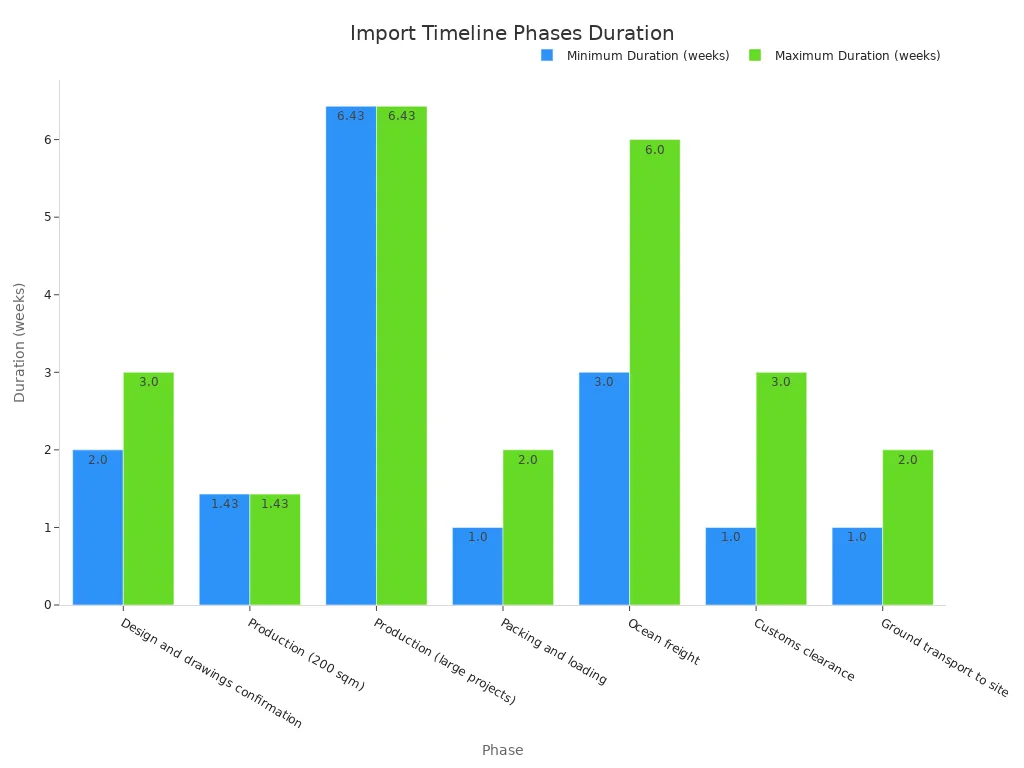
Start talking to suppliers at least 3–4 months before your target delivery date; for large projects, begin 4–6 months ahead. Drawing confirmation always takes longer than expected, so build in buffer time.
Treat US customs clearance and shipping as fixed blocks you cannot shrink. Importing on a tight deadline invites costly shortcuts. A realistic calendar keeps your playground opening on track.
You now have the full roadmap: find and vet china indoor playground equipment suppliers, finalize the design and quotation, plan shipping and customs, inspect the goods, and prepare installation. Careful supplier vetting, inspection, and shipping planning are what make an import project succeed. When you import indoor playground equipment from china to the usa, these three habits protect your budget and your opening date. Start today by researching suppliers and requesting quotes. With a clear plan, your new playground can welcome families sooner than you think.
FAQ
How long does the whole process take from first contact to opening day?
For a small project, plan on 10–14 weeks. For a large one, plan on 14–20 weeks. Start talking with china indoor playground equipment suppliers at least 3–4 months before your target date. Large projects need 4–6 months. Design approval always takes longer than you think, so leave extra buffer time.
What is the minimum order for a custom indoor playground?
Most factories give quotes per project, not per unit. A small soft play zone can work as a first order. Ask each supplier about their minimum project size and their minimum production run. Compare their answer with your floor plan before you commit.
How do I estimate shipping cost before production ends?
Ask for an estimated packing volume when production finishes. Match that volume to a container: a 20-foot holds about 33 cubic meters, and a 40-foot holds up to 66. Smaller volumes of 0–15 m³ can move as LCL. Confirm the Incoterm in your quote, because it decides who pays which charges.
Which payment terms are normal for a first order?
Most suppliers ask for a deposit to start production and the balance before shipment. Ask for the milestones in writing inside the revised quotation. Keep the deposit tied to approved drawings. Never pay the full amount before you inspect the goods.
Can the supplier handle installation in the USA?
Yes. Many turnkey manufacturers send an installation team, and that team usually finishes faster because they know the equipment. A local crew saves travel cost and handles future maintenance. Either way, request written installation instructions and drawings before the container arrives.


