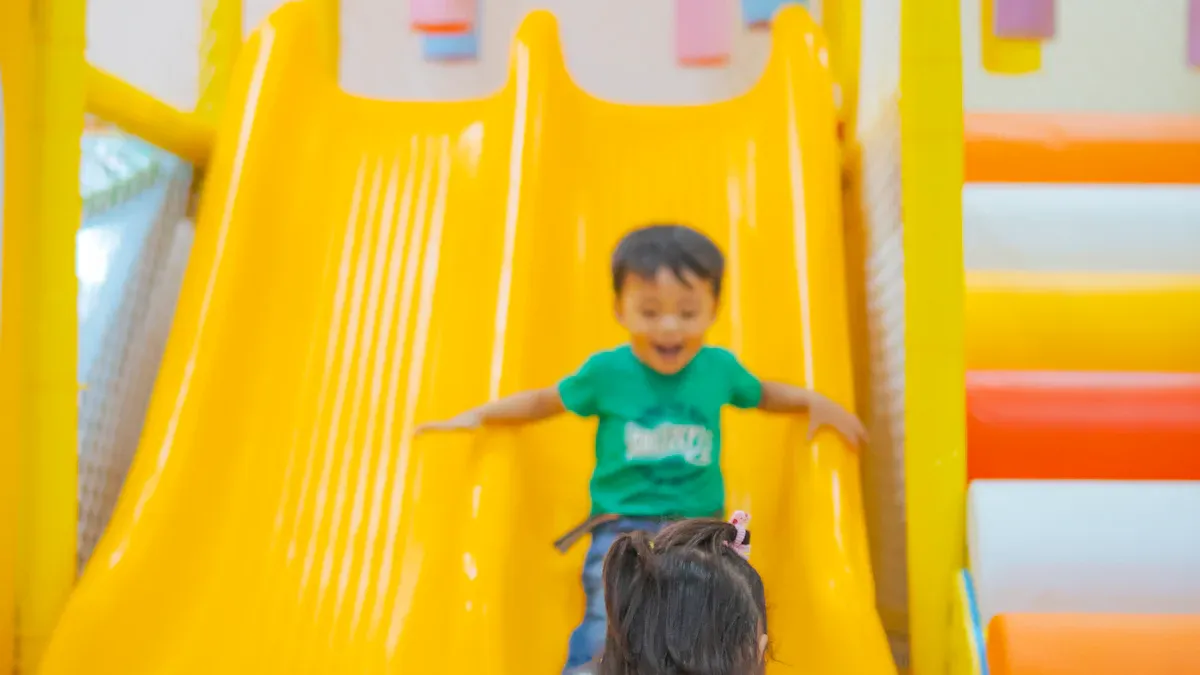
Choosing child indoor playground equipment for your kids can feel easy when you know what matters. You want safety, durability, and plenty of fun. Kids need indoor playground options that match their age and space. With the right indoor playground equipment, your kids get a safe and exciting place to play.
Key Takeaways
- Put safety first by picking equipment with smooth edges and safe materials. This stops kids from getting hurt and keeps them safe when playing.
- Pick equipment that fits your child’s age and skills. This makes playtime safe and fun for both young kids and older ones.
- Measure your space before setting up the equipment. Leave at least 6 feet of space around each item. This gives kids enough room to play safely.
Safety in Indoor Playground Equipment
Essential safety features
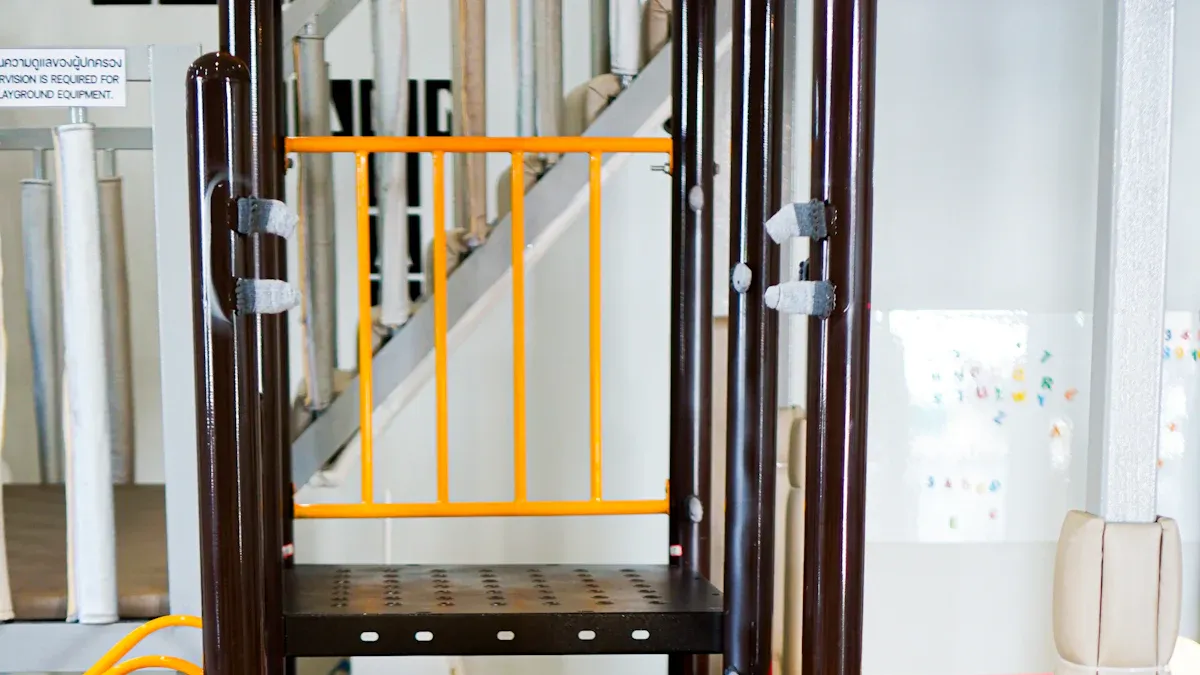
Safety is the most important thing when picking indoor playground equipment. You want your kids to play and have fun without getting hurt. Choose equipment with rounded edges and non-toxic materials. These features help stop injuries and keep kids away from harmful stuff.
Here’s how these features help keep your child safe:
| Feature | Safety Benefit |
|---|---|
| Rounded edges | Lower the chance of cuts or bruises |
| Non-toxic materials | Stop kids from touching dangerous substances |
Check if the equipment is strong and built well. Sturdy equipment lasts longer and keeps kids safe. Make sure there is a safe way to get in and out. This stops kids from getting in places they should not.
Tip: Watch your child while they play. Adults can help stop accidents and falls.
Other important safety features are:
- Equipment with no rust or sharp edges
- Enough space between play areas for safety
- Regular checks and repairs
- Ramps for wheelchairs so everyone can play
- Swings for kids with different needs
You can help all kids play by picking equipment with ramps and special swings. These features let every child have fun, no matter what they need.
Safety standards and certifications
You should make sure your playground equipment follows top safety rules. Safety standards show the equipment is tested and safe to use. Look for certifications like EN 1176, ASTM F1918-22, and ISO 9001. These are known around the world and mean the equipment is safe.
Here’s a table to help you know some important safety standards:
| Standard | Description |
|---|---|
| ASTM F1918-22 | Rules for safe soft play equipment in indoor places |
| CPSC | Handbook with important safety tips for playgrounds |
| ISO 9001 | Focuses on quality and is accepted worldwide |
| EN 1176 | Safety rules for amusement equipment in Europe |
Check for inspection reports and certifications before you buy. Certifications like ISO 9001, EN 1176, and ASTM F24 mean the equipment is very safe. Regular checks help keep the play area safe for a long time.
Note: Go over the safety rules with your child. Teach them about food, shoes, and how to use the equipment right.
Inclusive playgrounds follow these safety rules and have ramps and special swings. This makes playtime safe and fun for all kids.
By choosing good safety features and following safety rules, you can make a safe and happy play area for your kids.
Age-Appropriate Equipment
Matching equipment to age groups
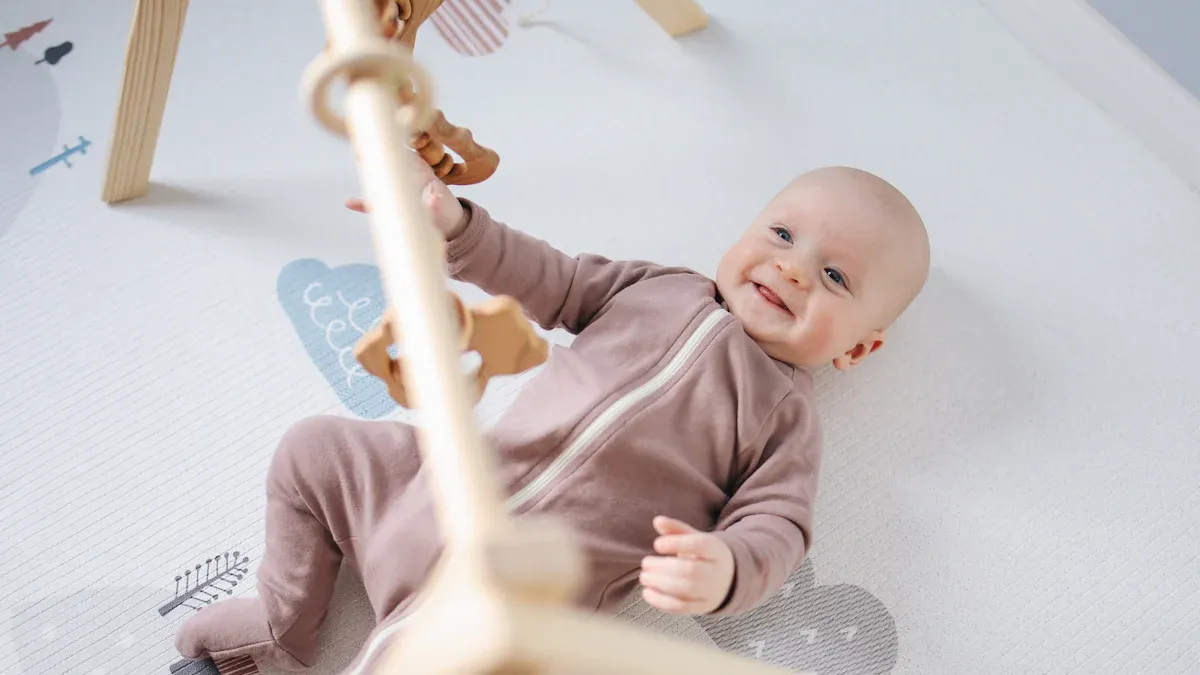
You need to pick equipment that matches your kids’ ages. This helps keep play safe and fun. For toddlers, use soft floors and low platforms. Toddlers like gentle slides and tunnels. Older kids want harder things like climbing walls and tall slides. Each age group needs different things to play with.
Here’s a quick guide to help you pick the right equipment:
| Criteria | Age Group (Years) | Description |
|---|---|---|
| Safety | 0-12 | Equipment must be safe for each age group to stop injuries. |
| Developmental Appropriateness | 0-12 | Equipment should fit how kids move and think at each age. |
| Engagement | 2-12 | Equipment should make kids want to play and talk with others. |
| Social Skills | 2-12 | Equipment should help kids play in groups and work together. |
| Age-Specific Physical Challenges | 5-12 | Equipment should give the right challenges to help kids get stronger. |
Soft floors and foam pieces help keep kids safe. Make sure kids have space to move around. This stops them from bumping into each other. Clean and check the equipment often to keep it safe.
Tip: Put a bench or chair close by. This lets adults watch kids while they play.
Multi-age and adjustable options
If you have kids of different ages, use equipment for all ages. Adjustable and modular equipment can change as your kids grow. You can start with a small set and add more later. This keeps the play area fun and new.
Here’s how adjustable equipment helps families:
| Feature | Benefit for Families with Different Ages |
|---|---|
| Toddler zones | Safe play areas with low platforms and soft surfaces for younger kids |
| Older children’s areas | Engaging climbing walls and slides that challenge older children |
| Family zones | Areas designed for joint play, encouraging interaction among siblings |
| Accessibility features | Wheelchair ramps and sensory-friendly zones for inclusivity |
Adjustable equipment lasts a long time. Jungle gyms with height changes grow with your kids. Modular sets let you add new things as your kids’ interests change. This makes your play area good for toddlers, older kids, and mixed ages.
- Pick equipment that matches preschoolers’ ages and skills.
- Give different activities for all ages and skill levels.
- Use adjustable systems so your play area works as kids grow.
Space Planning for Child Indoor Playground Equipment
Measuring available space
Before you buy any child indoor playground equipment, you need to know how much room you have. Grab a tape measure and check the length and width of your play area. Write down the numbers so you don’t forget. Use a calculator to figure out the total square footage. This helps you see what fits and what doesn’t.
You also want to keep your kids safe. Make sure you leave enough space around each piece of equipment. Experts say you should have at least 6 feet of open space on all sides. This is called the Safety Use Zone. It gives kids room to move and play without bumping into walls or furniture. For things like climbers or slides, check the rules for how much space you need. Some slides need more room, depending on their size.
Tip: Mark the area with tape before you set up your indoor playground equipment. This helps you picture where everything will go.
Maximizing play area
You can make even a small room feel big with smart planning. Try these ideas to get the most out of your space:
| Strategy | Description |
|---|---|
| Soft-sculpted foam | Adds safety and bright colors, perfect for active kids in small spaces. |
| Independent play systems | Stand-alone pieces fit well in tight spots and work great for toddlers. |
| Small play structures | Bring lots of fun without taking up too much room. |
| Engaging layout | Keeps traffic moving and separates busy and quiet zones for happy play. |
You can also look for compact or multi-use designs. Compact designs fit in small areas and don’t take over the room. Multi-use designs let kids climb, slide, and crawl all in one spot. These setups change as your needs change and can be customized for your space.
| Feature | Compact Design | Multi-Use Design |
|---|---|---|
| Space Efficiency | Fits in small areas | Lets kids do more with less space |
| Versatility | Good for one activity | Offers many ways to play |
| Adaptability | Stays the same | Can be changed as kids grow |
| Customization | Fixed size | Can be made to fit your room |
With a little planning, you can create a fun and safe play area for your kids, no matter how much space you have.
Durability and Materials
Best materials for indoor playground equipment
When you pick indoor playground equipment, you want it to last for years. Choosing durable materials makes a big difference. Some materials stand up to lots of play and keep your kids safe.
- Reinforced plastic works well for high-use equipment. It is sturdy, weather-resistant, and easy to clean.
- Steel is a top choice for frames and climbing structures. It is incredibly strong and lasts a long time.
- Rubber flooring gives a soft, cushioned surface. It helps prevent injuries and is simple to maintain.
You might see galvanized steel in many playgrounds. It can last 15 to 20 years or more with the right care. UV-stabilized plastics resist fading and cracking, usually lasting 10 to 15 years. Treated wood can work, but it needs extra care to avoid splinters or rot. Indoor equipment often lasts longer than outdoor gear because it stays out of harsh weather.
Tip: Always check that your equipment uses only durable materials. This helps you get the most out of your investment and keeps playtime safe.
Maintenance and cleaning
Keeping your playground clean and safe is easy when you follow a simple routine. Start with daily inspections. Look for hazards or worn spots. Clean high-touch areas every day. Deep clean the equipment once a week. Each month, check the floors and surfaces for damage.
| Frequency | Task Description |
|---|---|
| Daily | Clean high-touch areas |
| Weekly | Deep clean play equipment |
| Monthly | Maintain floors and surfaces |
You should also:
- Lubricate moving parts like swings and slides.
- Tighten any loose bolts or screws.
- Use safe disinfectants to sanitize surfaces.
- Replace sand or mulch in play areas as needed.
If you keep up with these steps, your durable materials will stay strong and safe for years. Regular care means fewer repairs and more fun for your kids.
Budget and Value
Setting a budget
You want to give your kids a great play space, but you also need to watch your wallet. Start by deciding how much you can spend. Prices for indoor playground equipment can vary a lot. Here’s a quick look at what you might pay:
| Equipment Type | Price Range |
|---|---|
| Simple Climbing Structures | $500 – $5,000 |
| Soft Play Equipment | $1,000 – $20,000 |
| Interactive Play Equipment | $5,000 – $25,000 |
| Multi-level Play Systems | $10,000 – $100,000+ |
| Ball Pits and Sensory Equipment | $500 – $10,000 |
Think about what your kids will use most. Make a list of must-haves and nice-to-haves. Focus on the essentials first. You can always add more later.
Tip: Set aside a little extra money for future repairs or upgrades. This helps you keep the play area safe and fun.
Features worth investing in
Not all features are equal. Some are worth every penny because they keep your kids safe and make the equipment last longer. Look for high-quality equipment that meets current safety standards. Choose items made from strong materials like galvanized metal frames or reinforced plastics. These materials hold up to lots of play and help you avoid costly repairs.
When you compare options, you’ll notice a few things:
- High-quality materials, such as stainless steel and high-density plastics, cost more but last longer.
- Metal structures are pricier than plastic, but they offer better durability.
- Wood is cheaper, but you may spend more on maintenance over time.
You should also check for soft padding, rounded edges, and secure anchoring. These features lower the risk of injuries and give you peace of mind. Regular maintenance keeps everything in top shape, so don’t skip it.
If you balance cost with quality and safety, you’ll create a play space that’s both smart and safe for your family.
Installation and Use
DIY vs. professional installation
When you get new indoor playground equipment, you have two choices. You can put it together yourself or pay someone to do it. Both ways have good and bad points. Here is a quick chart:
| Installation Method | Advantages | Disadvantages |
|---|---|---|
| Professional Installation | Good quality, easy for you, follows safety rules | Costs more, pay for work, may have travel costs |
| DIY Installation | Saves money, do it when you want, feels good if skilled | Takes longer, can be unsafe, needs skill |
If you like building things and want to save money, DIY could work. You can take your time and feel proud when you finish. But you must read the directions and use the right tools. If you make a mistake, it could be unsafe.
If you hire a pro, you do not have to worry. They know the rules and set up everything the right way. This costs more, but you get safety and good work. Local workers might be cheaper and close by, but they may not have special training.
Tip: If you are not sure about tools or safety, hire a pro. Your child’s safety is most important.
Portability and storage
You may want equipment that is easy to move or put away. Portable playground sets are good for small spaces or if you want to change things. Look for light pieces or ones that fold up. Some sets come apart fast, so you can store them in a closet or under a bed.
- Pick foam blocks you can stack for easy storage.
- Choose slides or climbers that fold for small rooms.
- Use mats with wheels for quick setup and cleanup.
Portable equipment helps you keep your play area neat and flexible. You can move things or put them away when you need space. This makes playtime easy and less stressful.
Engagement and Play Experience
Diverse attractions for all ages
You want your kids to have fun and stay busy. Mix different play areas to keep everyone interested. Here are some good choices for indoor playgrounds:
- Climbing structures help kids get stronger and test their skills.
- Slides are exciting and help kids learn to balance.
- Ball pits and swings let kids play together and make friends.
- Sensory play areas let kids touch and see new things.
- Toddler zones keep little kids safe while they play.
- Group games and inclusive play teach kids to work as a team.
If you add ramps for wheelchairs, more kids can join in. All kids can use swings, slides, and climbing structures together.
Themed design and imaginative play
A themed playground makes playtime feel like an adventure. You can pick a jungle, ocean, or castle theme. Kids like to pretend and make up stories. Themed slides and climbing structures help kids use their imagination and make each visit special.
A themed playground can help your community feel proud. It can show local history, culture, or nature. This makes your playground unique and brings families together. People feel like they belong when they visit.
| Aspect | Impact on Engagement and Creativity |
|---|---|
| Color Scheme | Bright colors make kids happy and excited. |
| Thematic Integration | A strong theme connects play areas for everyone to enjoy. |
| Interactive Features | Digital games and creative spots keep kids busy. |
| Themed Play Structures | Familiar places help kids pretend and have fun. |
Themed playgrounds give kids lots of ways to play and pretend. Kids make up new games and use swings, slides, and climbing structures in fun ways.
Including rest areas
Rest areas are important for comfort and safety. Kids and parents need places to sit and take breaks. Put benches and soft seats near the play areas. Restrooms and changing rooms help families with small kids. These spaces make your playground better for everyone and keep families close.
- Rest areas let parents watch their kids and relax.
- Things like restrooms and changing tables help all families.
- Kids stay safe because they do not have to leave to find a bathroom.
Rest areas help everyone rest and get ready to play again with swings, slides, and climbing structures.
You can pick child indoor playground equipment with confidence. Focus on safety and choose options that give toddlers and kids a place to explore. Watch as toddlers laugh and play. Kids love fun spaces. You help toddlers and kids grow strong and happy every day.
FAQ
How do you clean indoor playground equipment?
Wipe surfaces with a mild soap and water. Dry everything well. Check for sticky spots or dirt. Clean high-touch areas every day for best results.
What age is best for indoor playground equipment?
Most equipment works for ages 2 to 12. Always check the manufacturer’s age guide. Pick equipment that matches your child’s skills and interests.
Can you move indoor playground equipment easily?
Some sets fold or come apart for storage. Lightweight pieces move quickly. Look for portable designs if you want to change your play space often.